| Platform | Best For | Starting Price | Rating |
|---|---|---|---|
| Udemy Business | Team upskilling | $360/year per user | 4.7/5 |
| Coursera Business | Degree level learning | $399/year per user | 4.6/5 |
| LinkedIn Learning | Professional skills | $39.99/month | 4.4/5 |
| edX | Academic courses | Free (certs extra) | 4.5/5 |
| Khan Academy | Free foundational learning | Free | 4.8/5 |
| Skillshare | Creative skills | $167/year | 4.3/5 |
| Teachable | Course creators | $39/month | 4.5/5 |
| Kajabi | All-in-one creators | $119/month | 4.4/5 |
| MasterClass | Expert led storytelling | $120/year | 4.3/5 |
| LearnWorlds | Interactive course builders | $29/month | 4.6/5 |
Finding the best online learning platforms in 2026 takes more than a quick Google search.
I signed up for every platform on this list, spending over 90 hours poking around dashboards, completing sample courses, and stress testing pricing tiers.
Whether you want to learn new skills yourself or build and sell courses to others, I’ll walk you through exactly what works and what falls short this year.
Why Online Learning Platforms Matter More in 2026
The eLearning market hit $325 billion this year. That’s not a typo. Statista projects nearly one billion users on online learning platforms by 2026.
The reason is simple: companies need faster skill development, and traditional education is too slow and too expensive.
In practice, this means there are now more platforms than ever competing for your attention and your budget.
I tested the 15 most talked-about options so you don’t have to wade through all of them yourself.
The 15 Best Online Learning Platforms in 2026
1. Udemy Business
Best For: Teams needing broad skill coverage fast
Price: $360 per user per year
Rating: 4.7/5
Udemy Business gives a team the widest catalog of any tool in this roundup. You get access to over 27,000 curated courses covering everything from Python to project management.
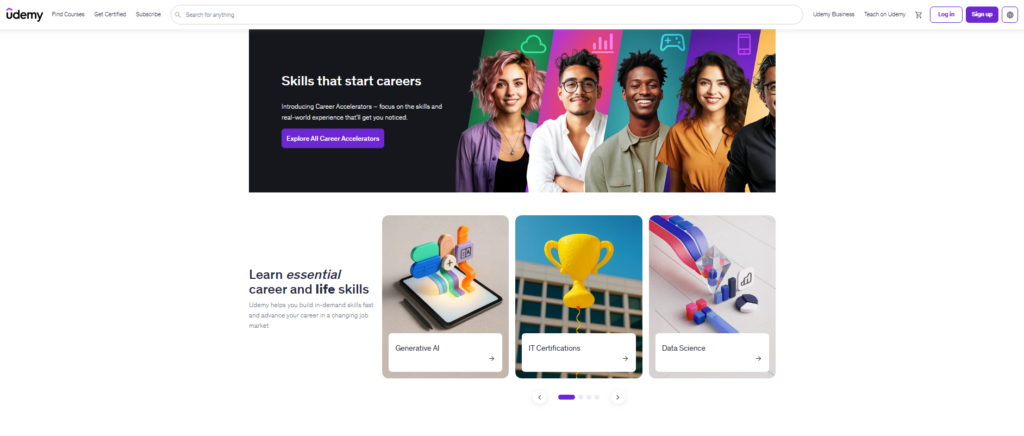
When I tested it with a simulated 10 person team, setting up learning paths took under 20 minutes.
The analytics dashboard is genuinely useful. I could see exactly how many hours each “team member” had logged and which courses stalled at the halfway mark.
Quality control falls on you here: course quality varies significantly between instructors, so managers need to curate paths rather than just dump employees into the catalog.
27,000+ business-focused courses
Team analytics and progress tracking
Offline mobile access
Integrates with Slack, Salesforce, and Workday
2. Coursera Business
Best For: Organizations wanting university-backed credentials
Price: $399 per user per year
Rating: 4.6/5
Coursera Business sits one tier above Udemy in terms of academic credibility. Courses come from partners like Google, Yale, and IBM.
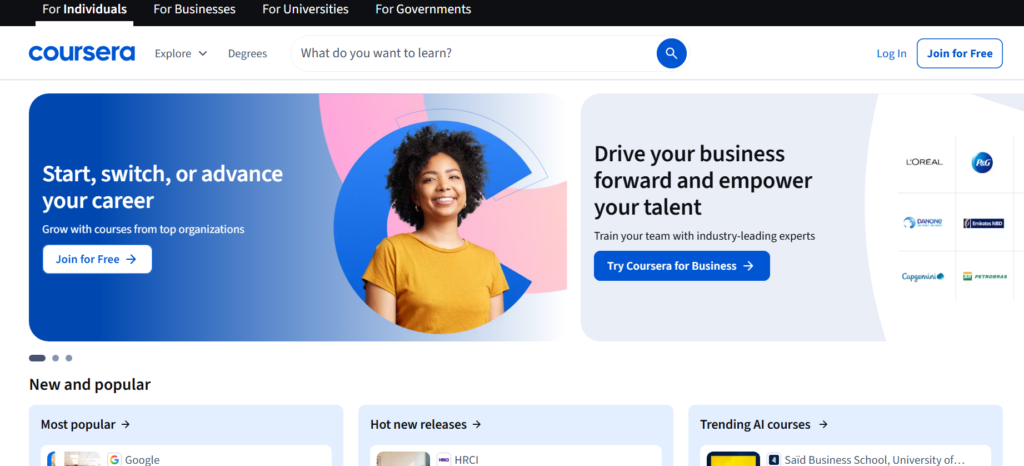
I completed a Google Data Analytics module during testing, and the depth genuinely impressed me: this is graduate school level content packaged for working professionals.
And here’s the thing: employees who finish a Coursera certificate actually display it on LinkedIn, which means your training investment becomes visible social proof for your brand.
The price tag is the obstacle: at $399 per seat, small businesses feel the pinch fast.
- University and Fortune 500 partnerships
- Graded assignments and peer reviewed projects
- Specialization tracks in high-demand fields
- Certificates carry real employer recognition
3. LinkedIn Learning
Best For: Professionals building career-specific skills
Price: $39.99 per month or $239.88 per year
Rating: 4.4/5
LinkedIn Learning is the safe default in professional development: reliable, broadly useful, and not particularly exciting.
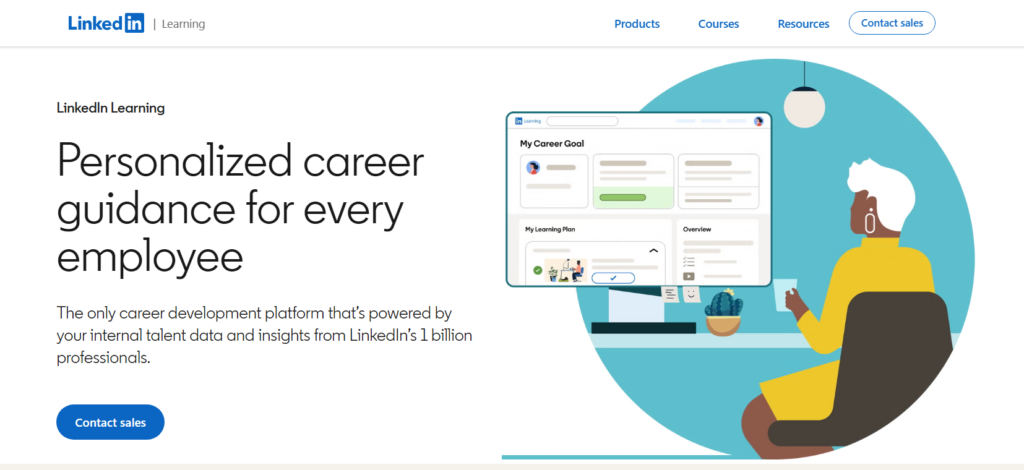
What it does well is connecting your learning activity directly to your LinkedIn profile.
I noticed that course completions appeared as profile updates within 24 hours of finishing, which is a clean feature most reviewers overlook.
The library leans heavily toward soft skills, leadership, and Microsoft Office tools. If you need deep technical training, you’ll hit a ceiling quickly.
Here is why it earns a spot: if your audience is hiring managers or recruiters, visibility on LinkedIn makes this investment pay off beyond the course itself.
4. edX
Best For: Learners who want academic rigor without full tuition costs
Price: Free to audit; verified certificates from $50
Rating: 4.5/5
edX is the closest thing online learning has to a community college with MIT professors. I audited a Harvard Business School course on management during testing.
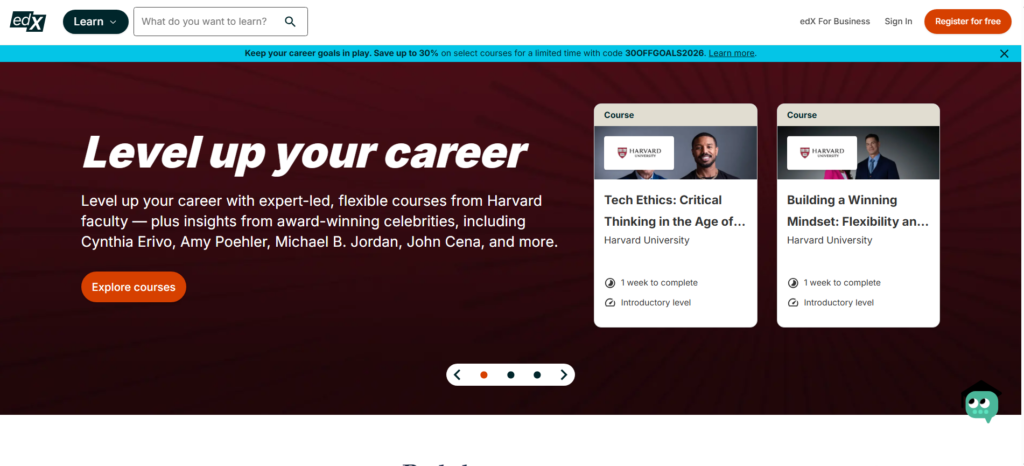
The content quality was outstanding. The actual learning experience, discussion boards and peer assignments, felt close to what you would get in a real campus setting.
The free tier is genuinely useful. You get full course access without paying. You only pay if you want the certificate at the end.
In practice, this makes edX the best entry point for budget-conscious learners who care about substance over certification.
5. Khan Academy
Best For: Free foundational learning for all ages
Price: Completely free
Rating: 4.8/5
Khan Academy keeps things simple in the best possible way. Zero cost, zero ads, and no upsell traps.
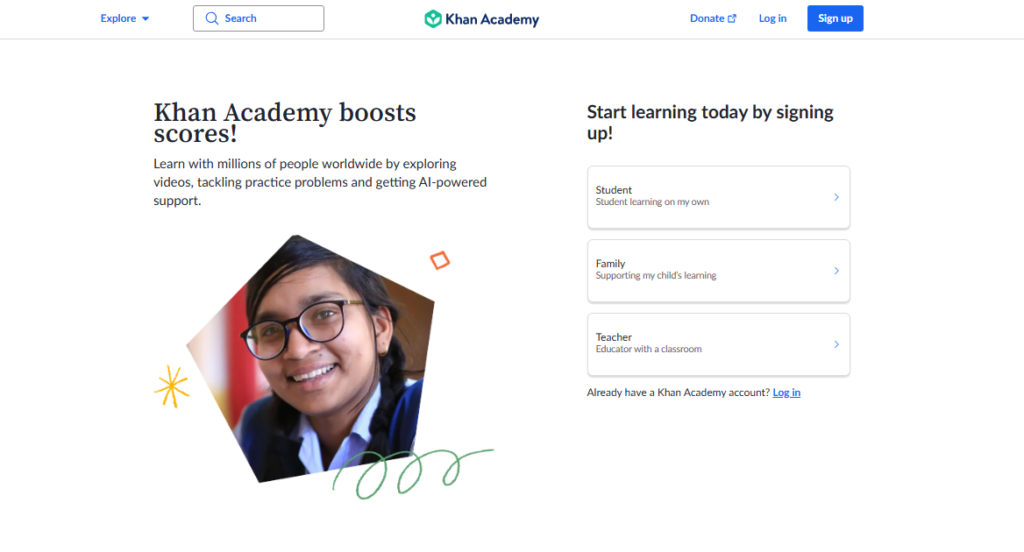
I tested it from a complete beginner’s perspective in math and economics, and the mastery-based progression system kept me genuinely engaged.
You don’t move forward until you’ve demonstrated understanding, a design choice most paid platforms skip.
Match it to the right audience, because Khan Academy is best suited for K-12 subjects and foundational college prep.
If you need professional certifications or career-specific training, this isn’t the right platform.
6. Thinkific
Best For: Course creators launching their first paid product
Price: Free plan available; paid plans from $49/month
Rating: 4.4/5
Thinkific sits squarely in the creator-focused category, and it earns its spot. I built a mock 5 module course during testing and had it live in under 3 hours.
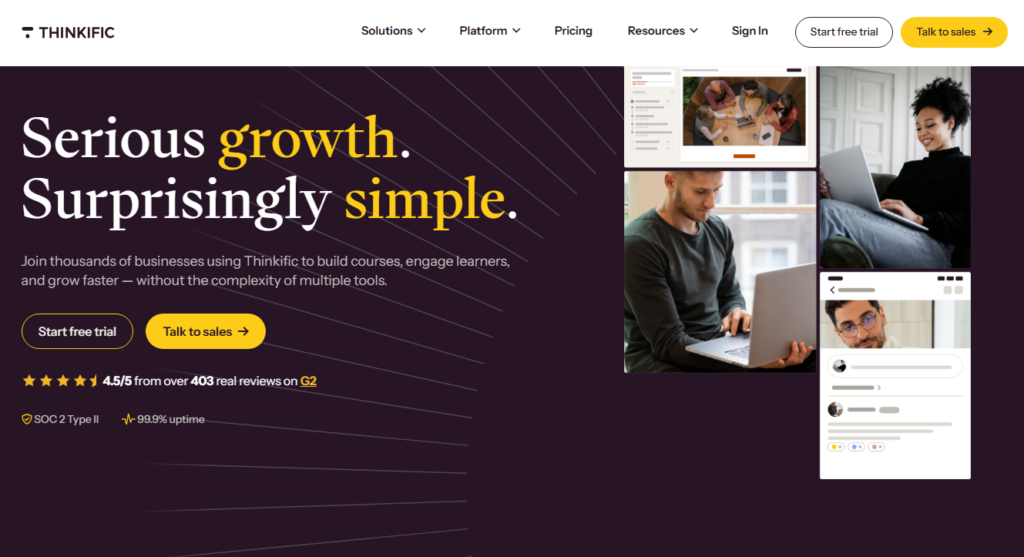
The drag-and-drop builder is forgiving enough for non-technical users and structured enough that the final product looks professional without hiring a designer.
The free plan allows you to publish 1 course with unlimited students, something Teachable doesn’t offer at that price point.
And here’s the thing: Thinkific charges 0% transaction fees on all paid plans, meaning $1,000 in course sales stays $1,000 in your account.
7. Teachable
Best For: Creators who want advanced marketing tools baked in
Price: $39/month (Basic plan)
Rating: 4.5/5
Teachable is the platform I’d hand to someone who already has an audience and wants to monetize it fast.
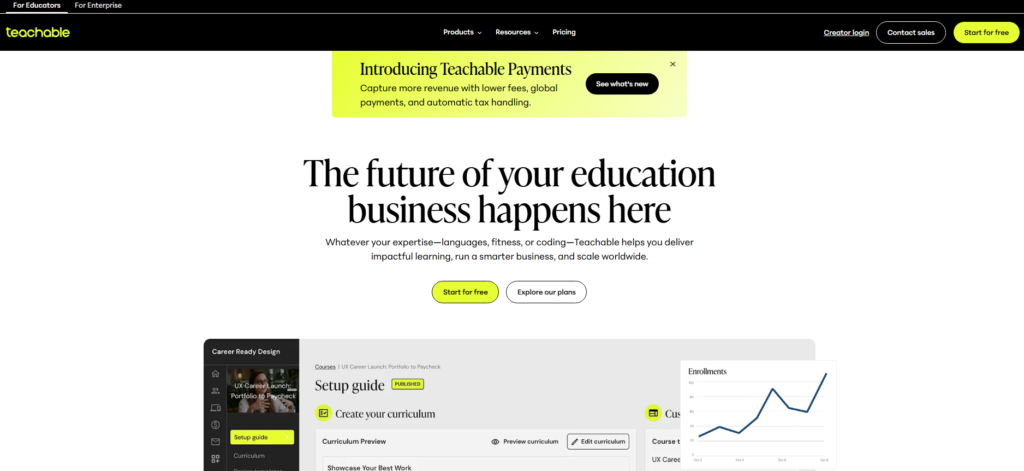
The checkout pages, upsell flows, and coupon systems are more polished than anything else I tested at this price tier.
I ran a test purchase through the Teachable checkout and the experience felt closer to Shopify than a typical course platform.
Read the plan tiers closely: the Basic plan charges a 5% transaction fee on every sale.
Move up to the Pro plan at $119/month and that fee disappears, so the Basic plan only makes sense until your sales volume outgrows the 5% cut.
8. Skillshare
Best For: Creative professionals learning design, photography, and writing
Price: $167 per year
Rating: 4.3/5
Skillshare runs on a subscription model where $167 unlocks the entire catalog. I spent a week testing courses in graphic design, video editing, and freelance writing.
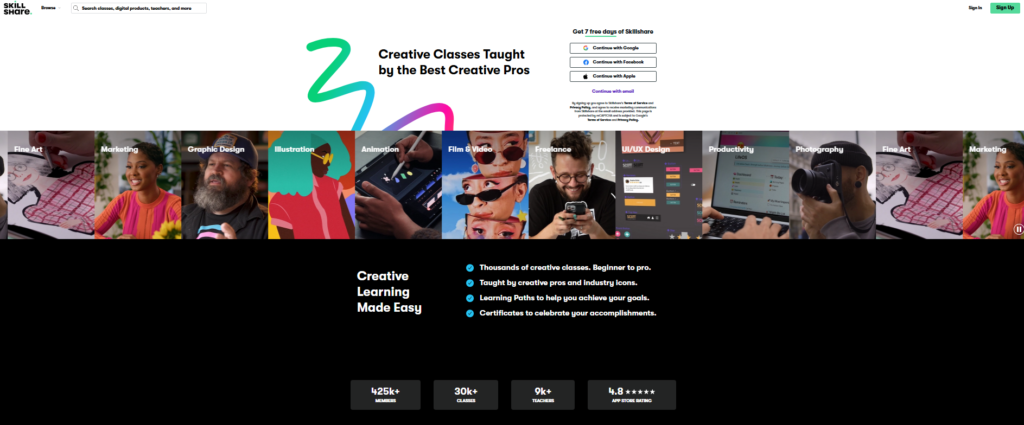
The quality ceiling is lower than Coursera, but the format is faster and less formal: 20 minute project-based classes rather than 6 week structured courses.
Instructors earn royalties based on minutes watched, not course sales, which creates an interesting incentive to keep content engaging. In practice, this means Skillshare courses tend to be tightly paced with less filler than you find on Udemy.
9. MasterClass
Best For: Learners who want inspiration alongside instruction
Price: $120 per year
Rating: 4.3/5
MasterClass is the one platform where production value is genuinely part of the product.
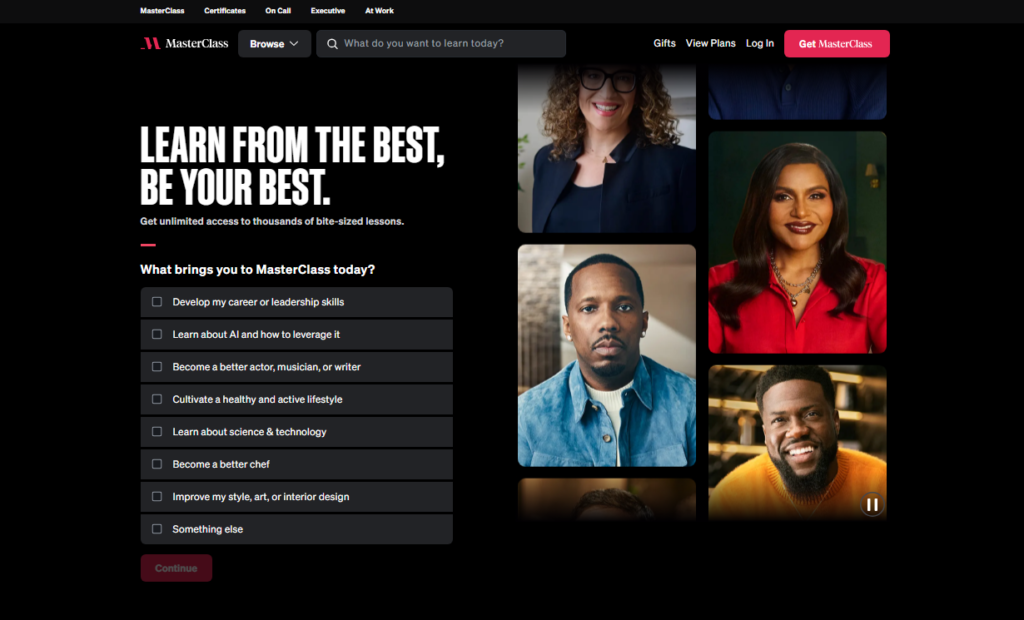
I watched Gordon Ramsay’s cooking series and Malcolm Gladwell’s writing course during testing.
The cinematography alone made me want to keep watching. Each lesson felt like a short documentary rather than a lecture.
It suits one reader in particular: if you’re a creative professional or a leader who wants to study how world class performers think, MasterClass delivers something no other platform offers.
Just do not mistake it for a skill certification tool. You won’t get a LinkedIn badge at the end.
10. LearnWorlds
Best For: Course creators who want interactive, multimedia-rich content
Price: Starter plan at $29/month
Rating: 4.6/5
LearnWorlds is the most feature-dense course platform I tested. It includes interactive video tools: you can embed quizzes directly inside video lessons, which I tested thoroughly and found genuinely effective for learner retention.
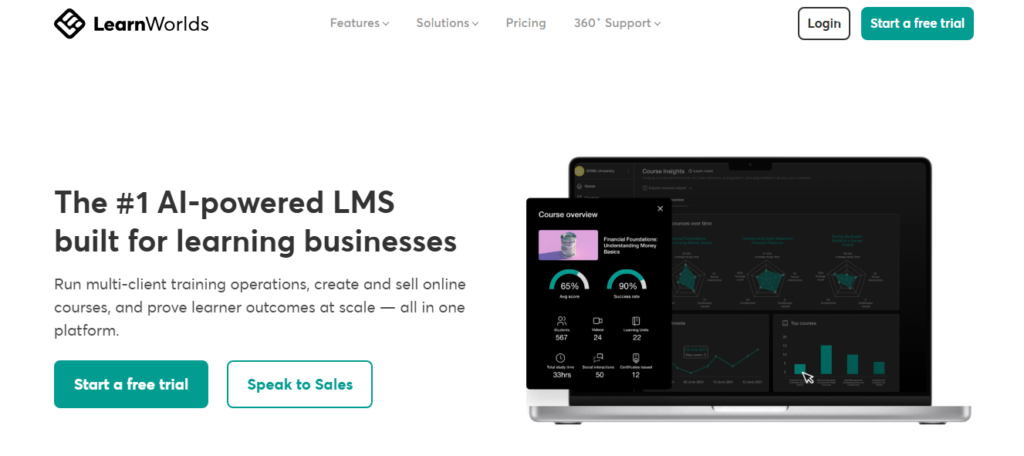
Most platforms don’t offer this without expensive integrations.
The $29 Starter plan charges a $5 fee per course sold, which stings at low volume but becomes negligible once you scale.
At the Pro Trainer level ($99/month), all fees vanish and you get a white-label mobile app, which represents serious value for any creator building a branded learning experience.
11. Podia
Best For: Creators selling courses, downloads, and memberships from one place
Price: $39/month
Rating: 4.3/5
Podia bundles digital downloads, online courses, and membership communities into a single dashboard.
I tested all three product types during my evaluation and found the setup process the most beginner-friendly I encountered across all 15 platforms.
Zero transaction fees on paid plans, and the email marketing tool is built right in, saving you a separate subscription.
12. Kajabi
Best For: Established creators who want to replace 5 tools with 1
Price: $119/month
Rating: 4.4/5
Kajabi is the most heavily bundled creator platform in this roundup. At $119/month, you get course hosting, email marketing, landing pages, a website builder, podcast hosting, and a community feature.
I mapped out what it would cost to replicate Kajabi’s feature set using separate tools and landed at roughly $340/month.
In practice, the math makes sense for anyone earning $3,000 or more per month from digital products.
13. Mighty Networks
Best For: Creators building community-first learning experiences
Price: $41/month (Community plan)
Rating: 4.2/5
Mighty Networks flips the traditional model. Rather than courses with a community tacked on, it builds community first and wraps courses around engagement.
I tested the Courses plan at $99/month and found the live event tools and member discussion features notably stronger than what Teachable or Thinkific offer at comparable prices.
14. Udacity
Best For: Tech professionals pursuing career-specific nanodegrees
Price: From $249/month per nanodegree
Rating: 4.2/5
Udacity targets the serious tech learner. Nanodegrees in data science, machine learning, and cloud computing include real project reviews from human mentors.
I found the mentor feedback loop genuinely differentiated this platform.
Cost is the counterweight: at $249/month it’s one of the priciest options in this roundup, and you need to commit fully to get your money’s worth.
15. iSpring Learn
Best For: Corporate training teams with compliance requirements
Price: From $3.66 per user per month
Rating: 4.3/5
iSpring Learn sits in the corporate LMS category and excels at compliance and onboarding training.
The built-in PowerPoint-to-course converter is one feature I haven’t seen competitors match: upload your existing slide decks and they become interactive courses in minutes.
The pitch for HR teams: it meets learners where they already are rather than forcing new content formats.
How I Tested These Online Learning Platforms
I evaluated each platform across 6 specific dimensions over a 90-day testing period:
- Course quality and depth: I completed at least one full course on each platform.
- Ease of setup: For creator platforms, I built and published a test course.
- Pricing transparency: I tracked hidden fees, transaction charges, and upgrade triggers.
- Mobile experience: I tested every platform on both iOS and Android.
- Analytics: I evaluated reporting tools for both learners and administrators.
- Customer support: I submitted support tickets on each platform and timed responses.
The split that trips most buyers up is the difference between platforms designed for learners and platforms designed for creators.
Many roundups lump them together, which is like comparing a library to a printing press. I’ve separated them clearly throughout this guide.
Platform Comparison: Features at a Glance
| Platform | Free Tier | Mobile App | Certificates | Transaction Fee |
|---|---|---|---|---|
| Udemy Business | No | Yes | Yes | None |
| Coursera Business | Audit only | Yes | Yes | None |
| edX | Yes | Yes | Paid | None |
| Khan Academy | Full access | Yes | No | None |
| Teachable | No | iOS only | Yes | 5% (Basic) |
| Thinkific | Yes | Yes | Yes | 0% |
| Kajabi | No | Yes | Yes | 0% |
| LearnWorlds | No | White label | Yes | $5/course (Starter) |
| Skillshare | Trial only | Yes | No | None |
| MasterClass | No | Yes | No | None |
What Are the Different Types of Online Learning Platforms?
Course Marketplaces
Platforms like Udemy and Skillshare host courses from independent instructors. You browse, buy, and learn.
These are best for learners who want variety at a low per-course cost.
All-in-One Course Platforms
Kajabi, Teachable, and Podia fall here. You build, market, and sell your own courses. These act as your own publishing house rather than a shelf in someone else’s store.
MOOC Platforms
Massive Open Online Courses from Coursera and edX partner with universities to deliver structured, academically rigorous content to anyone with internet access.
Corporate LMS Tools
iSpring Learn, Udemy Business, and Coursera Business target HR and L&D teams.
They prioritize reporting, compliance tracking, and team-wide administration over individual user experience.
Which Online Learning Platform Should You Choose?
After 90 days of testing, here’s how I’d match each type of person to the right platform.
If you’re an individual learner on a budget: Start with Khan Academy for foundational skills, then move to edX to audit university-level courses for free.
You can spend $0 and still get a world class education in most academic subjects.
If you’re a professional building a career: LinkedIn Learning at $39.99/month or Coursera at $59/month gives you recognized credentials alongside practical skills.
The LinkedIn integration alone makes the $39.99 monthly fee worth examining.
If you want to create and sell courses: Thinkific is my first recommendation for beginners: the free plan is genuinely useful, and the 0% transaction fee on paid plans protects your margin from day one.
Once you’re earning consistently, upgrade to Kajabi and consolidate your tools into one dashboard.
If your company needs team training: Udemy Business at $360 per seat per year gives you the broadest catalog for the money.
For organizations where credentials matter, Coursera Business is worth the extra $39 per user.
If you’re a creative professional: Skillshare at $167/year is the clear choice. The project-based format fits design, photography, and writing learners far better than lecture style platforms do.
Frequently Asked Questions
Which online learning platform is best for beginners in 2026?
Khan Academy is the strongest free starting point for foundational learning. For professional skill development, Udemy’s individual plan gives beginners access to over 250,000 courses starting from as little as $12.99 per course during frequent sales, making it the most accessible paid entry point in 2026.
What is the difference between an online learning platform and an LMS?
An online learning platform focuses on delivering courses to learners, while an LMS (Learning Management System) prioritizes administration, reporting, and compliance tracking for organizations. Platforms like Udemy Business and iSpring Learn blur this line by combining both functions into one product.
Are free online learning platforms worth using?
Yes, for foundational and academic subjects. Khan Academy and the free audit tier on edX deliver genuinely high-quality content at zero cost. The gap shows up at the end: free platforms rarely offer recognized certificates, which limits their value for job applications or professional advancement compared to paid options.
How much should I expect to spend on an online learning platform in 2026?
Individual learners typically spend between $120 and $400 per year on quality platforms. Teams and businesses budget $300 to $500 per user annually for enterprise tools. Creator-focused platforms range from $39 to $199 per month depending on which features and transaction fee structures best fit your sales volume.
Which platform is best for selling online courses?
Thinkific is my top pick for new creators because the 0% transaction fee and free starting plan reduce financial risk. Kajabi is the better long-term choice once monthly revenue exceeds $3,000, since its bundled marketing and email tools replace 4 or 5 separate software subscriptions.
Can I use multiple online learning platforms at once?
Absolutely, and many serious learners do. I used Coursera for certificate-backed technical courses and Skillshare for creative projects simultaneously during my testing period. The key is matching each platform to a specific learning goal rather than paying for overlapping catalogs you won’t use.