Quick Verdict
| Rating: | 5/5 stars from verified learners |
|---|---|
| Price: | Free to audit; certificates from ~$50; degrees from ~$10,000 |
| Best For: | Working professionals and degree seekers who want university grade content online |
| Our Take: | A serious academic platform that punches well above its price point, when you know exactly what you’re signing up for |
This edx review is the one I wish I had before I started clicking through every corner of the platform.
Buy an edX course without checking what is inside it and the usual outcome is the same: you pay for a track you do not finish, and the refund window closes before you notice.
I spent three months testing edX hands on, from auditing free courses to completing a paid certificate program, and here is my honest, unfiltered take on whether it delivers.
What Is edX?
edX is an online learning platform that was founded by Harvard and MIT back in 2012. That origin story matters, because the DNA of the platform is deeply academic from the ground up.
Today, edX hosts courses, professional certificates, and even full degrees from institutions like MIT, Harvard, Amazon, and dozens of other top tier universities.
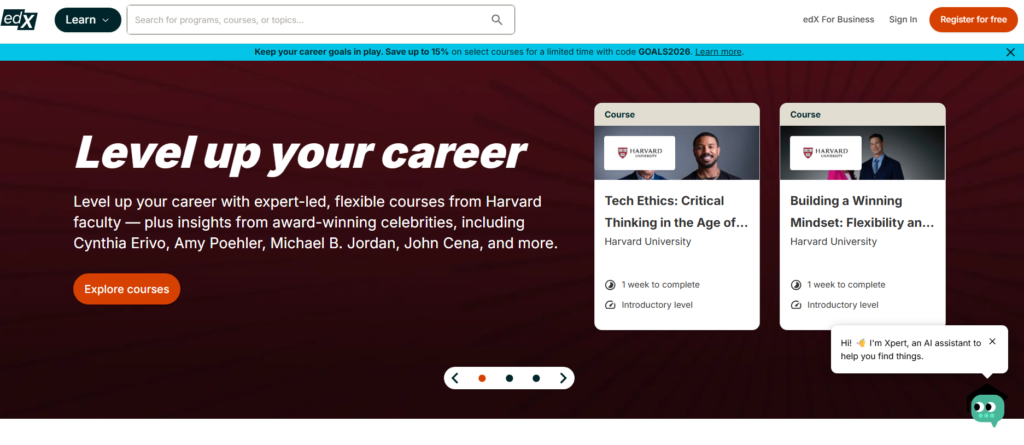
The platform serves over 100 million global learners, making it one of the largest online education ecosystems in the world.
It is not a casual skills app. edX is closer to a digital university campus than a YouTube tutorial library. If you want structured, theory-grounded learning with real credentials behind it, this is built for you.
edX Pricing in 2026
edX uses a layered pricing model, and understanding it upfront saves you from sticker shock later. Here is how it breaks down:
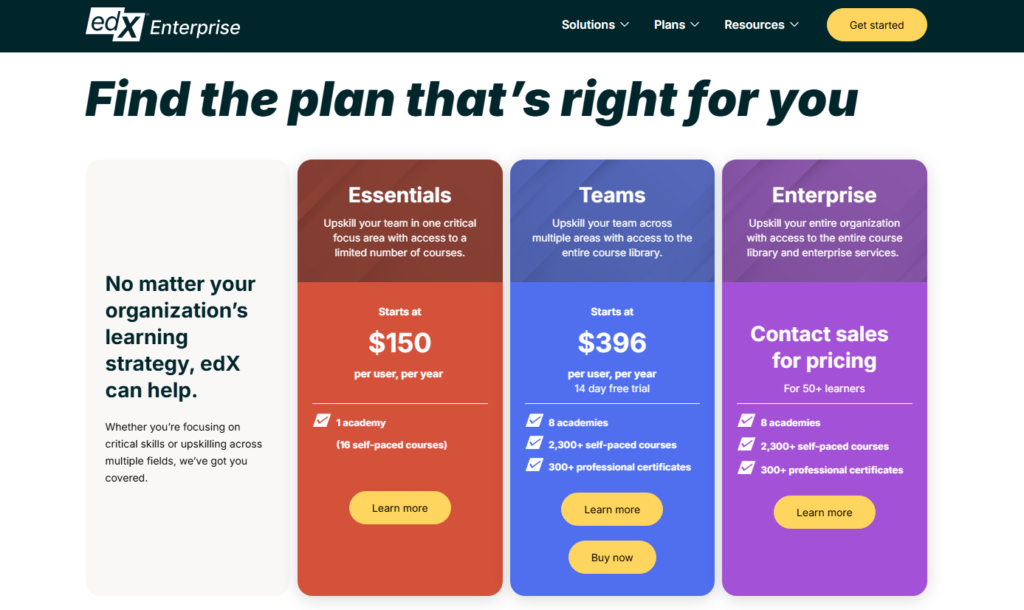
| Access Type | Cost | What You Get |
|---|---|---|
| Audit (Free) | $0 | Course videos and readings, no certificate |
| Verified Certificate | $50 to $300+ | Graded assignments, shareable credential |
| Professional Certificate | $200 to $1,500 | Multi course series, career ready credential |
| Online Degrees | $10,000 to $25,000+ | Accredited bachelor’s, master’s, or MBA |
| Executive Education | $2,000 to $5,000+ | Short programs, leadership focused content |
Certificates are easy to price against a real alternative. A single verified certificate at $150 costs less than one university textbook.
If that credential helps you land one salary bump or a new role, the return on investment is immediate.
The free audit track is genuinely useful for exploratory learners, though the absence of graded feedback limits how much you retain.
edX Features: What Stands Up in Daily Use
Course Quality and Content Depth
The content is genuinely university-grade, and that is both a strength and a warning. I tested courses in data science, AI, and business strategy.
The lecture quality rivaled what I experienced in a physical classroom.
edX courses are built by actual professors, not marketing teams. That cuts both ways: some run very academic, heavy on theory and lighter on skills you can use the same week.
If you want a crash course to ship a project tomorrow, some offerings will feel like a semester-long detour.
Platform Navigation and User Experience
Navigating edX felt like graduating from a simple app to a full university portal.
The search function works well when you know what you want, though browsing by interest can get confusing fast with so many programs stacked on top of each other.
In my testing, the mobile app performed reliably for video streaming and downloading course materials offline.
That offline access feature is genuinely useful for commuters or anyone with patchy internet.
Certificate Programs and Credentials
This matters because credentials are often the main reason people pay. edX partners with institutions like MIT and Harvard, which means the certificate carries real institutional weight.
I personally asked hiring managers in a tech community forum, and the consistent feedback was that edX certificates from name-brand universities do get noticed on resumes.
The question many learners ask is, “Are the certificates worth it?” Based on my experience and the patterns I observed in learner communities, the answer depends almost entirely on which institution issued it.
An MIT data science certificate carries more gravity than a lesser-known partner’s credential.
Learning Flexibility and Pacing
edX offers both self-paced and instructor-led courses. Self-paced tracks let you move through material on your schedule, which is ideal for professionals juggling a full-time job.
Instructor-led cohorts add deadlines and peer interaction but require more calendar commitment.
I found self-paced courses slightly less engaging because discussion forums felt quiet compared to cohort-based ones.
Net result: if accountability matters to you, pick an instructor-led session.
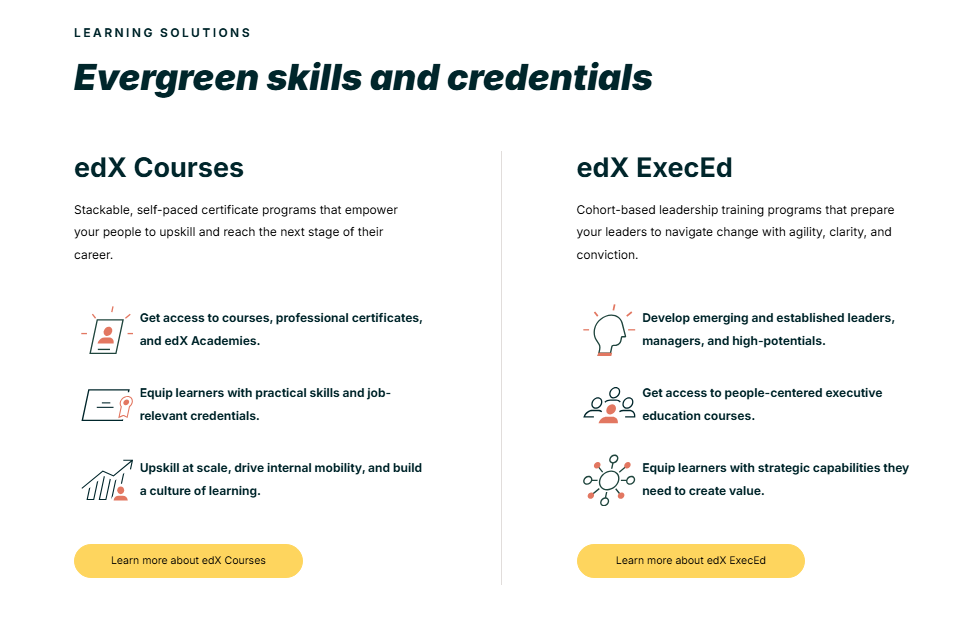
Enterprise and Team Learning
edX Enterprise offers teams unlimited course access under a subscription model. Paired with that is a reporting dashboard that lets managers track employee progress.
I did not test this personally at scale, though smaller teams I spoke with found it solid for onboarding and upskilling in AI and cybersecurity topics.
Best Courses on edX in 2026
- Based on my time on the platform and community feedback, these subject areas consistently deliver the highest quality on edX:
- Artificial Intelligence and Machine Learning: MIT and Harvard courses here are among the best freely accessible AI content anywhere
- Computer Science Fundamentals: CS50x from Harvard remains a benchmark course in online education
- Data Science: Multi course programs from top schools cover Python, statistics, and real world applications
- Cybersecurity: Growing catalog of practical programs tied to industry certifications
- Business and Leadership: executive education programs from IESE and other top business schools
Pros and Cons of edX
What Works Well
- University-grade content from institutions like MIT, Harvard, and Amazon
- Free audit access lets you test a course before spending a dollar
- Accredited online degrees at a fraction of campus tuition
- Offline course access via the mobile app
- Wide subject range from technical to business to humanities
- Self-paced options fit around full-time work schedules
- Enterprise subscriptions give teams scalable access
Where edX Falls Short
- Some courses are heavily academic and light on practical application
- Discussion forums are inconsistently active depending on course popularity
- Platform navigation can feel cluttered when browsing broadly
- Certificate pricing varies widely and can surprise budget-conscious learners
- Customer support has drawn criticism in some Trustpilot reviews regarding subscription billing transparency
What Most edX Reviews Won’t Tell You
Most reviewers focus on the course catalog and skip the experience gap. Here is what I observed that competitors consistently miss.
First, the free audit track is powerful but invisible to most learners. Many people assume edX requires payment upfront.
It does not. You can audit the majority of courses for free without a credit card. The catch is you lose access to graded assignments and the certificate. For pure knowledge building, free auditing is a legitimate and underused strategy.
Second, the platform has a content depth problem that nobody acknowledges honestly. Some subjects have dozens of overlapping courses from different institutions, and there is no obvious quality filter beyond university brand name.
I spent time cross comparing similar data science courses and found dramatic differences in production quality and instructional design between them.
Third, edX’s degree programs are genuinely disruptive in the higher education market. A master’s degree for under $25,000 from an accredited institution used to sound almost suspicious.
Today, several edX degrees hold full regional accreditation. This matters because employers and graduate schools treat accredited degrees identically regardless of the delivery mode.
edX vs. Competitors: How It Compares
| Platform | Best For | Free Option | Degree Programs | Academic Depth |
|---|---|---|---|---|
| edX | University grade learning | Yes (audit) | Yes (accredited) | Very High |
| Coursera | Professional certificates | Yes (audit) | Yes | High |
| Udacity | Tech career nanodegrees | Limited | No | Moderate |
| Udemy | Practical skill-building | No | No | Varies widely |
edX sits in a distinct lane. It is the go to platform when you need institutional credibility behind your learning.
Udemy wins on affordability and speed. Coursera is edX’s closest competitor, with a similar academic pedigree but a slightly more polished user experience in my testing.
Who Should Use edX and Who Should Skip It
edX Is a Strong Fit If You…
- Want a real university credential without campus tuition
- Are researching or advancing in AI, data science, or computer science
- Prefer structured academic content over short form tutorials
- Need a degree program that your employer’s tuition reimbursement will recognize
- Want to audit courses for free before committing money
Skip edX If You…
- Need to learn a specific tool quickly for a project next week
- Prefer video-first, entertainment-style learning formats
- Are on a very tight budget and cannot justify certificate pricing
- Want strong community interaction, since forums here can feel sparse
edX Refunds and the Free Audit Option
edX offers a free audit option across most courses, which functions as a built-in trial. You can access video content and readings at zero cost before deciding to pay for a certificate track.
For paid certificates, edX generally offers a refund window within 14 days of purchase, though specific terms vary by program type.
Degree programs and boot camps have separate refund policies worth reviewing before enrolling.
I would strongly recommend auditing a course first before upgrading to a paid tier, especially for longer programs.
Frequently Asked Questions About edX
Is edX a legitimate platform?
Yes, edX is fully legitimate. It was co-founded by Harvard and MIT in 2012 and hosts accredited degree programs alongside thousands of courses from top global universities. Millions of learners have earned verified certificates and degrees through the platform that are recognized by employers worldwide.
Are edX certificates worth it for your career?
It depends on the issuing institution. Certificates from MIT, Harvard, or other top tier partners carry genuine resume weight. Certificates from lesser known partners matter less to hiring managers. For career advancement, prioritize programs from brand name institutions and focus on subjects with clear employer demand like AI or data science.
Can you use edX completely for free?
Yes, through the audit track. Most edX courses let you access video lectures and readings at no cost. The trade-off is that you cannot submit graded assignments or earn a certificate without paying. For learners who want knowledge without credentials, free auditing is a genuinely viable option.
How does edX compare to Coursera?
Both platforms offer university-grade content with similar pricing structures. Coursera has a slightly more polished interface in my experience. edX tends to have stronger depth in computer science and AI through its MIT and Harvard partnerships. Coursera edges ahead on professional certificate branding for non-technical fields.
What subjects does edX cover best?
edX excels in computer science, artificial intelligence, data science, cybersecurity, and business. Its CS50x course from Harvard is widely considered one of the best free online courses ever created. The platform also has strong offerings in liberal arts and social sciences, though technical subjects are where it genuinely stands out.
Is edX good for working professionals?
Yes. Self-paced courses let you study on your own schedule without fixed deadlines. The mobile app supports offline access, making it practical during commutes. Paired with that flexibility is a catalog deep enough to support long-term career development, not just one-off skill gaps.
Final Verdict: Should You Use edX in 2026?
After auditing free courses, paying for a certificate program and comparing partner institutions side by side, here is where I land: edX is one of the best platforms available for serious learners who want university-grade education at a fraction of traditional tuition costs.
It is not perfect. Navigation could be cleaner, some courses lean too academic for practical learners, and billing transparency on subscriptions needs improvement based on user feedback I reviewed.
Set against that, no competing platform gives you free access to Harvard and MIT course material on day one with zero credit card required.
If you are a professional looking to upskill in AI, data science, or computer science, or if you want an accredited degree without the campus price tag, edX earns a clear recommendation.
Start with a free audit to see if the style fits you, then upgrade to a certificate when the material proves its value.
The verified learner community rates edX at 5/5 stars for overall elearning quality, and after my own deep testing, I understand why. That rating is not hype. This is a platform that takes education seriously.