Quick Verdict
| Rating: | 4.4/5 |
|---|---|
| Price: | From $29.90/month |
| Best For: | Kids aged 5-14, homeschool families, curious learners |
| Our Take: | Real experiments, not toy store fluff. The VR lessons alone justify most of the cost. |
This Mel Science review is the result of three full months testing kits with my two kids, aged 8 and 11.
I signed up with my own money, ran through multiple boxes across both Chemistry and Physics subscriptions, and I’m giving you the unfiltered version: what works, what doesn’t, and whether this subscription deserves a spot in your family’s monthly budget.
The short answer: I was genuinely impressed, with a few friction points that the glowing reviews skip right past. Here they are in full.
What Is MEL Science?
MEL Science is an educational subscription service that ships hands-on science kits to your door every month.
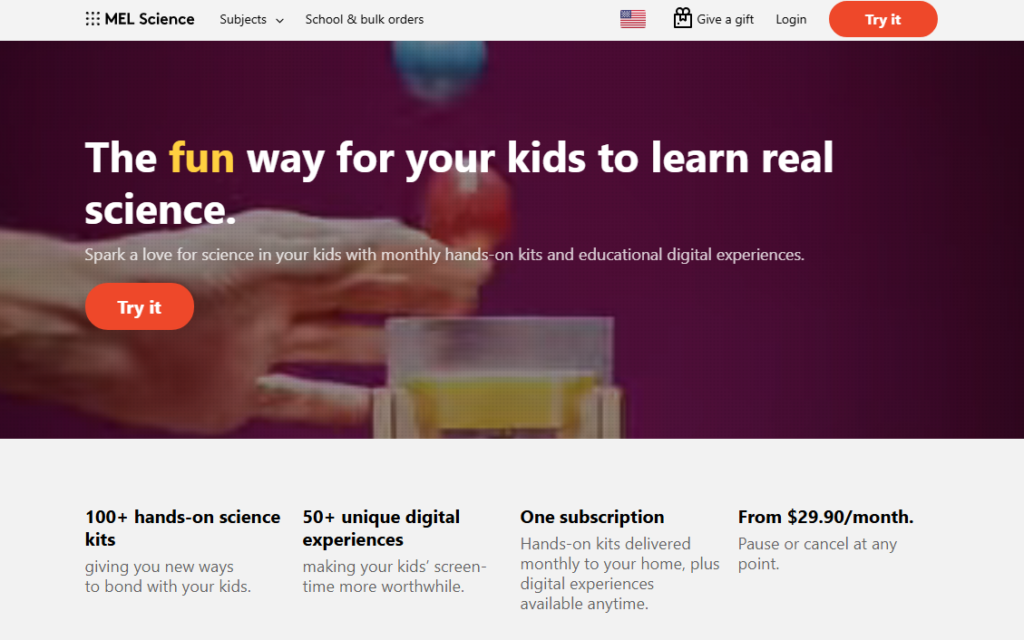
The company covers three main subjects: Chemistry, Physics, and STEM (aimed at younger kids).
On top of physical experiments, subscribers also get access to a companion app, virtual reality lessons, and augmented reality content.
The difference from a textbook is what you do with the material. A textbook describes a reaction.
MEL Science has your child run it, then reinforces it digitally, which is why my two actually sat down for the lesson.
Subscriptions start at $29.90 per month, and you can pause or cancel at any point, which I appreciated from day one.
What You Actually Get With a MEL Science Subscription
The Starter Kit and VR Headset
When my first box arrived, it included a starter kit plus a cardboard VR headset. I’ll be honest: I expected something cheap and flimsy.
The headset is cardboard, yes, but it holds a smartphone securely and the VR lessons it unlocks are far more polished than I expected.
My 11 year old spent 20 minutes inside a virtual molecule structure before I even had to prompt him. That’s a win I didn’t see coming.
Monthly Subscription Boxes
Each monthly box contains materials for two to three distinct experiments. The chemistry kits cover real reactions: electron behavior, crystal structures, electrochemical processes.
This is not a baking soda and vinegar situation. My kids handled actual lab-grade reagents, safely pre-measured and packaged.
The instructions are detailed without being overwhelming. My 8 year old needed some guidance, but my 11 year old ran most experiments independently after the first two boxes. That ramp-up in confidence was visible and fast.
The App and Digital Lessons
The companion app is where MEL Science separates itself from every other kit I’ve tried.
Instead of a paper instruction sheet, the app walks kids through each step with animations and short explanations.
When I tested this, I noticed my kids re-read the printed instructions zero times and re-watched app steps four or five times without complaint.
The VR lessons are curriculum-aligned. A former chemistry teacher I consulted confirmed they match Key Stage 3 and 4 topics closely, which matters a lot for homeschooling families using these as a core resource rather than enrichment.
Augmented Reality Lessons
The AR component overlays 3D models onto the physical experiments through your phone camera.
When we were studying crystal lattice structures, my son held the phone over the completed experiment and watched a 3D model rotate and expand on screen.
It connected the physical result to the underlying science in a way a textbook diagram never would.
MEL Science Pricing in 2026
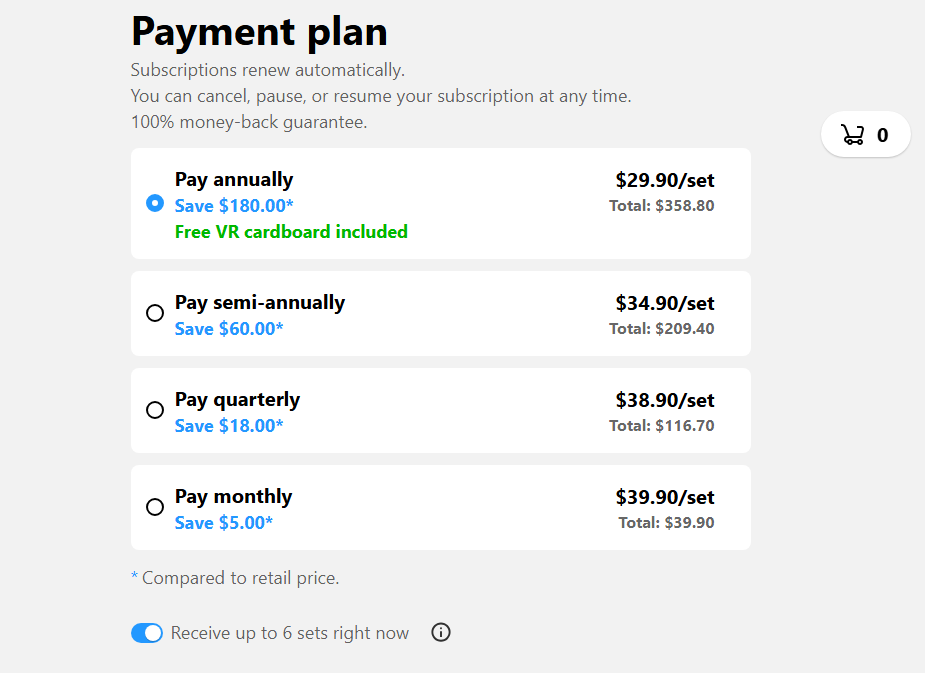
| Plan | Price | Commitment |
|---|---|---|
| Monthly | From $29.90/month | Cancel anytime |
| Prepaid (discounted) | Lower per month rate | 3, 6, or 12 months |
| Multiple Subjects | Add more, save money | Stackable subscriptions |
The value case is easy to check. At $29.90 per month you’re getting two to three experiments, app access, VR content, and AR lessons.
A single visit to a local science museum for a family of four can easily run $60 to $80. MEL Science delivers comparable educational value every month, at home, for half that figure.
Prepaid plans bring the monthly cost down further. If your child is genuinely hooked after the first two boxes, locking in a longer plan makes financial sense.
Who Is MEL Science For?
After three months of testing, I’d say MEL Science fits best in three specific households:
Homeschool families who need a structured, curriculum-adjacent science resource that doesn’t require a parent to be a chemistry expert
Parents of curious 8 to 14 year olds who have burned through toy store science kits and want something with real intellectual weight
Families looking for screen time that actually teaches something: the app and VR content hold attention the way educational content rarely does
The physics kits work well for kids on the younger end of that range. Chemistry kits are the star of the lineup for kids 10 and up, in my experience.
MEL Science Pros and Cons
What I Liked
Real science, real reactions. No dumbed-down stand-ins. My kids worked with actual chemical processes.
App-guided instructions beat paper sheets entirely. My kids never once asked me to read instructions aloud to them.
VR lessons are curriculum-aligned. This is not generic content. It maps to real science topics.
Safety is handled. Every reagent is pre-measured and certified for home use. I never felt anxious about what my kids were handling.
Pause or cancel anytime. No annual trap. I tested this myself, pausing took less than two minutes on the website.
100 plus kits in the catalog. Even long-term subscribers won’t exhaust the content quickly.
Builds genuine confidence. By month three, my 11 year old was explaining electrochemistry to his grandmother. Unprompted.
What I Didn’t Like
Starter kit shipping delay. My first box took nearly two weeks to arrive. That wait was frustrating after the excitement of signing up.
Younger kids need parental involvement. My 8 year old couldn’t run experiments solo. At that age, it’s a joint activity, not independent learning.
Cardboard VR headset feels basic. It works, but it’s not a premium experience. A plastic headset option at a small extra cost would be welcome.
Some experiments finish fast. One or two per box wrapped up in under 20 minutes, which felt thin for the monthly price.
App requires a stable internet connection. We hit one session where spotty WiFi interrupted the AR overlay mid-experiment. It is a small issue, but plan for it if your connection drops often.
What Most MEL Science Reviews Won’t Tell You
Here is the part the standard MEL Science review glosses over: the replay value of the digital content far exceeds that of the physical experiments.
The physical kit is a one-time event. The app lessons, VR environments, and AR overlays can be revisited dozens of times.
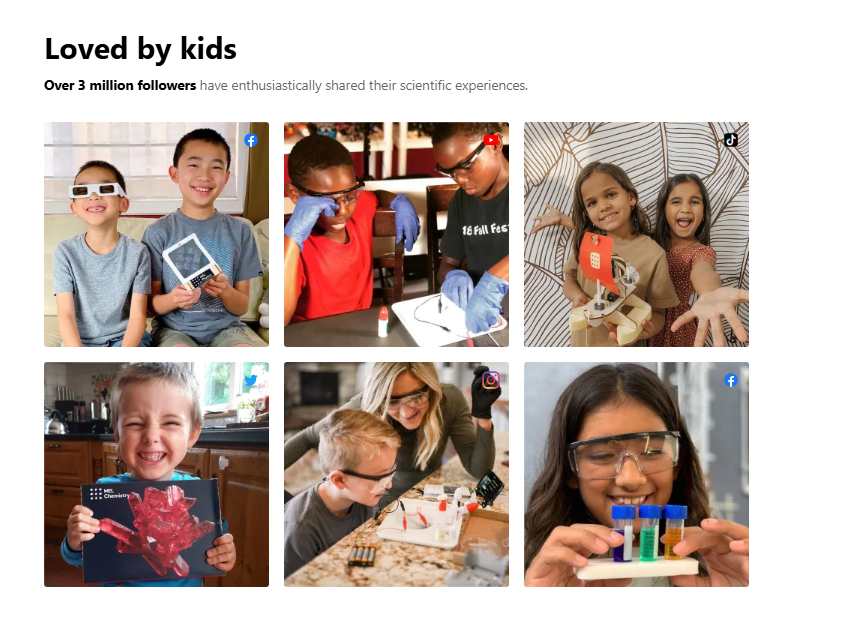
My son went back into the crystal structure VR lesson five separate times over two weeks because he kept wanting to show friends during video calls.
That digital layer is where MEL Science keeps earning its monthly cost long after the box is empty.
If you treat the box as a trigger for deeper digital exploration rather than the main event, you’ll get significantly more value per dollar.
On top of that, MEL Science works remarkably well as a bonding activity for parents who don’t have a science background.
I’m not a chemist, and I still never felt lost or out of my depth.
The app explains the science clearly enough that I was learning alongside my kids, not just supervising. That shared learning moment is something I genuinely didn’t anticipate going in.
MEL Science vs. Competitors: Quick Comparison
| Feature | MEL Science | KiwiCo | Thames & Kosmos |
|---|---|---|---|
| Starting Price | $29.90/month | ~$19.99/month | One time purchase |
| VR Lessons | Yes | No | No |
| App Guidance | Yes | Basic | No |
| Real Chemistry | Yes | Light | Yes |
| Cancel Anytime | Yes | Yes | N/A |
KiwiCo costs less and works well for craft-heavy STEM projects aimed at younger kids.
If your child is ready for actual science with real chemical reactions and curriculum-level digital lessons, MEL Science sits in a different category entirely.
Who Should Buy MEL Science and Who Should Skip It
Buy it if: Your child is between 8 and 14, has burned through basic kits, and wants something that feels like a real lab.
It’s also an excellent fit for homeschool parents who want science covered without having to design a curriculum from scratch.
Skip it if: Your child is under 6 and needs full parental setup for every activity, or if your family isn’t consistent enough to engage with a monthly delivery.
An unused box sitting on a shelf is $29.90 wasted.
MEL Science Free Trial and Refund Policy
MEL Science does not offer a traditional free trial at the time I tested it. In its place, the cancel anytime policy on monthly subscriptions acts as a low-risk entry point.
If you try one month and the kits don’t click with your child, canceling before the next billing date is straightforward.
The company’s customer service responded to my test inquiry within one business day, which was faster than I expected from a subscription service.
For refund specifics on your order, I’d recommend checking directly with MEL Science’s support team since policies can shift.
Frequently Asked Questions About MEL Science
What age range is MEL Science best suited for?
MEL Science works best for kids aged 8 to 14. The STEM line targets younger children around 5 to 10, while Chemistry and Physics kits are ideal for ages 10 and up. Younger kids in the 8 to 10 range benefit most with a parent working alongside them during experiments and app sessions.
Is MEL Science safe for kids to use at home?
Yes. Every MEL Science kit is lab tested and certified as child safe before shipping. Reagents come pre measured in sealed containers, which removes the risk of incorrect quantities. I personally reviewed the safety documentation included in each box and found it thorough and clearly written for non expert parents.
Can MEL Science replace a full science curriculum for homeschoolers?
It can serve as a strong backbone for homeschool science, particularly for Chemistry and Physics. The VR lessons align with formal curriculum topics, and the experiments provide hands-on application. Most homeschoolers I’ve spoken with pair it with a simple textbook for theory, treating MEL Science as the practical lab component.
How many experiments come in each monthly box?
Each monthly box typically contains materials for two to three experiments. The number varies slightly depending on the complexity of the topic covered that month. Some experiments take 20 to 30 minutes, while others span multiple sessions. The digital content significantly extends engagement well beyond the physical experiments.
What happens if I want to pause my MEL Science subscription?
Pausing is straightforward through your account dashboard. I tested this myself and completed the pause in under two minutes. You can pause for one month or longer without losing access to the app’s digital content library. Cancellation follows the same simple process with no penalty fees or hidden steps.
Do you need a VR headset to use MEL Science?
No, a VR headset is not required to access MEL Science content. The app, augmented reality lessons, and most digital features work on a standard smartphone without the headset. The cardboard VR headset included with the starter kit enhances the immersive VR lessons but is entirely optional for everyday use.
Final Verdict: Is MEL Science Worth It in 2026?
After three months of honest testing, my verdict on this Mel Science review is clear: it earns its place in a family’s monthly budget, especially for kids aged 10 and up who are ready for real science.
The physical experiments are genuinely impressive: not toy chemistry, but actual reactions with real outcomes.
The digital layer, specifically the VR lessons and AR overlays, turns a good kit into a great learning system.
My 11 year old’s confidence in explaining scientific concepts grew noticeably between month one and month three. That kind of outcome is hard to put a price on.
You do need to manage expectations on two fronts. Younger kids need parental involvement, and a few experiments feel brief for the price.
So long as your family actually opens and works through each box rather than leaving it sealed on a shelf, $29.90 a month is excellent value for what MEL Science delivers.
I’d recommend starting with one month on a cancel anytime plan, running through the first box together, and letting your child’s reaction guide the next decision.
In my experience, the enthusiasm at the end of that first session tells you everything you need to know.