Quick Verdict
| Rating: | 4.1/5 |
| Price: | Free to browse: courses from $10 to $200 (frequent sales bring most under $20) |
| Best For: | Self driven learners who want practical, affordable skills without a subscription lock in |
| Our Take: | Udemy is the thrift store of online education: you can find genuine gems for next to nothing, but you need to know how to shop. Quality varies wildly, and the lack of industry recognized certificates is a real gap. The bottom line: great for skill building on a budget, less ideal if credentials matter. |
This Udemy review cuts straight to what most sites dance around: yes, Udemy is legitimate, but it is not perfect for everyone.
I spent over three months working through courses across tech, design, and business to give you a real picture rather than a marketing brochure. If you are weighing whether to spend your money here, keep reading.
What Is Udemy?
Udemy is an open online learning marketplace where independent instructors build and sell their own courses.
It works less like a university and more like a giant digital bookstore: anyone knowledgeable can publish a title, and buyers are left to judge quality for themselves.
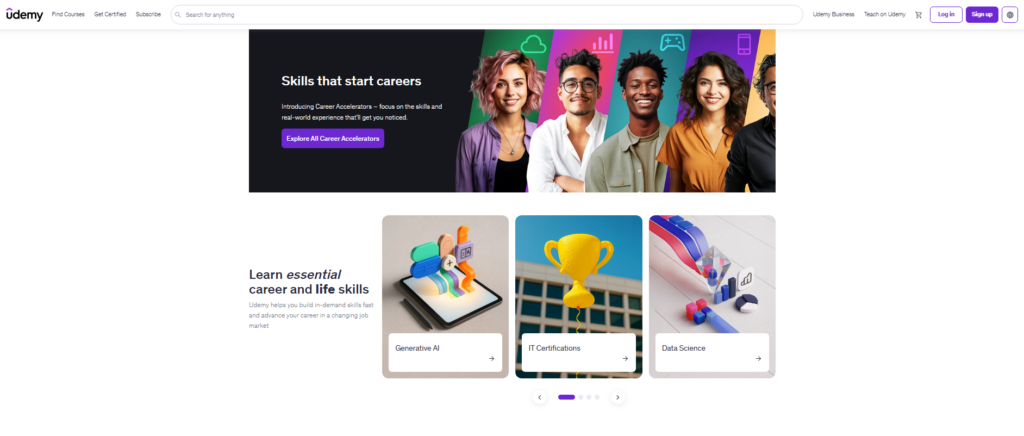
Founded in 2026 and headquartered in San Francisco, Udemy now serves over 50 million learners worldwide with a catalog that spans coding, photography, marketing, yoga, and just about everything in between.
The platform operates two distinct products. There is the consumer marketplace, where individuals buy courses outright.
Then there is Udemy Business, a subscription product aimed at corporate teams. Most casual learners interact with the consumer side, which is what I focused on in my testing.
How Much Does Udemy Cost in 2026?
Pricing on Udemy is genuinely unusual. Courses are listed at full price, often between $80 and $200, but the platform runs sales so frequently that paying that list price feels like a mistake.
In my experience, nearly every course drops to the $10 to $20 range during one of Udemy’s near-constant promotional events.
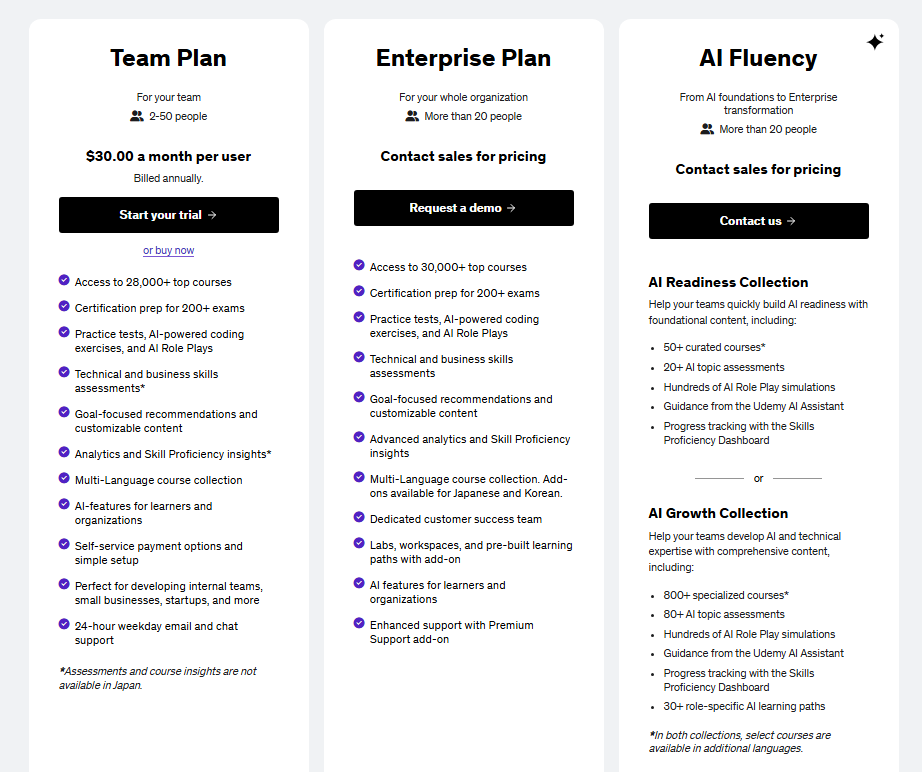
| Plan | Price | What You Get |
|---|---|---|
| Individual Course | $10-$200 (usually $10-$20 on sale) | Lifetime access to one course |
| Personal Plan | ~$30/month | Access to a curated subset of courses via subscription |
| Udemy Business | Custom pricing (team based) | Full catalog access for organizations |
The lifetime access model is one of Udemy’s strongest selling points. Once you buy a course, it is yours indefinitely, including any updates the instructor adds later.
The catch is that the Personal Plan subscription only covers around 10% of the total catalog, so most courses still require individual purchase.
Compare the two routes directly: if you buy three courses at $15 each, you have spent $45. A monthly Personal Plan subscription runs around $30. For light learners buying one or two courses a year, individual purchases win on value.
How Much Do Other Online Learning Platforms Cost?
| Platform | Price | Certificate Quality | Course Depth |
|---|---|---|---|
| Udemy | $10-$20/course (on sale) | Completion only | Varies widely |
| Coursera | $49-$79/month | University backed | Structured, rigorous |
| Skillshare | ~$168/year | Completion only | Short, project based |
| LinkedIn Learning | ~$40/month | LinkedIn badge | Professional, concise |
Udemy wins on raw affordability. The reason is simple: no accreditation costs and a marketplace model that keeps overhead low. The trade-off is that Coursera certificates carry far more weight with employers.
The Pros and Cons of Udemy
Pros
- Massive catalog: I found courses on topics I genuinely could not locate elsewhere: niche software tools, regional languages, hyper-specific certifications.
- Low cost when on sale: Paying $13 for a 30-hour Python course works out at pennies per lesson.
- Lifetime access: I revisited a course I bought two years ago and found it had been updated with new content. No extra charge.
- No subscription required: Buy only what you need. No recurring charges to forget about.
- Mobile app: Downloading lectures for offline viewing worked smoothly in my testing, which proved genuinely useful on commutes.
- 30-day refund: A real safety net that makes impulse buys less risky.
- Udemy Business option: Teams get curated, vetted content: a noticeably better experience than the open marketplace.
Cons
- Quality is inconsistent: I worked through one web development course that was genuinely excellent, and another in the same category that felt like a 1990s PowerPoint presentation.
- No industry-recognized certificates: Udemy certificates confirm completion, not competence. Employers know the difference.
- Inflated “original” prices: Seeing a course listed at $199 that immediately drops to $14 feels misleading.
- Minimal community features: Q&A sections exist, but instructor response times vary enormously. Some took weeks to reply to my questions.
- No structured learning paths: You build your own curriculum, which suits self-directed learners but overwhelms beginners.
How Trustworthy Are Course Reviews on Udemy?
This is something most Udemy reviews gloss over, and it deserves honest attention. Udemy prompts students to leave a rating after watching just 12 to 15 minutes of content. That is not enough time to evaluate quality properly.
The result is that many high-rated courses are rated on the strength of their first lecture, not the whole course.
I noticed several courses with 4.5-star ratings that dropped in quality sharply after the first few lectures.
My advice: read the written reviews, not just the star average. Sort by “Most Critical” and look for pattern complaints about outdated material or poor audio. That tells you far more than the headline rating.
On top of that, Udemy does use a filter to catch fraudulent ratings, and their calculation weights reviews from the most engaged students more heavily, which helps but does not fully solve the problem.
What Sorts of Courses Does Udemy Offer?
Lifetime Access and Course Updates
When I bought a machine learning course two years ago, I was skeptical that the content would stay relevant. It did.
The instructor pushed major updates covering new libraries and tools, and I received access automatically. That kind of long-term value is genuinely rare in online learning.
Top Categories Worth Exploring
In my testing, the strongest courses on Udemy cluster around technology, IT certifications, data science, and digital marketing.
These categories attract instructors with real-world experience and large student bases, which creates a quality feedback loop.
Creative subjects like music production and graphic design are hit-or-miss. Personal development courses tend to be inspirational rather than practical, so go in with lower expectations.
The Learner’s Perspective
The learning experience itself is clean. The video player works well, playback speed controls are easy to use, and I found the 1.5x speed setting ideal for introductory material.
Subtitles are available on most top courses, which I relied on during noisy commutes.
The free course previews are underrated, and almost no review mentions them.
Watching even three minutes of a free preview gives you a clear sense of the instructor’s teaching style before you spend anything.
Community Features and Interaction
Community features are Udemy’s weakest area. There is no student forum or peer discussion board in the traditional sense, just a Q&A section per course. In active courses, this works reasonably well.
In smaller courses, I waited over a week for instructor responses. If you learn best through discussion, this limitation matters.
Udemy Personal Plan
The Personal Plan is worth considering if you plan to take multiple courses within a year and those courses happen to be in the subscription catalog.
The catch is that the catalog coverage is limited: around 10% of total courses. I tested it for a month and found the selection adequate for mainstream topics but thin for niche subjects.
Udemy vs. Competitors: Direct Comparisons
Udemy vs. Coursera
Coursera is the academic heavyweight. Courses are built with university faculty and often lead to credentials that employers recognize.
Udemy wins on price and variety. Coursera wins on credibility and structure. So if a certificate matters for your career, Coursera justifies its higher cost. If you just want to learn a skill fast and cheap, Udemy delivers.
Udemy vs. Skillshare
Skillshare runs on a subscription model with short, project-based courses. Udemy courses tend to be longer and more comprehensive.
Skillshare suits creative explorers who want to try many things without committing. Udemy suits learners with a specific skill target who want depth over breadth.
Udemy vs. LinkedIn Learning
LinkedIn Learning integrates directly with your LinkedIn profile, which gives its certificates a professional visibility that Udemy cannot match.
The content leans toward business and software skills, with a polished production quality that Udemy’s marketplace cannot guarantee consistently. For career-focused professionals, LinkedIn Learning edges ahead on positioning even if Udemy wins on content volume.
Who Should Buy Udemy (and Who Should Skip It)
Buy Udemy if you are:
- Budget-conscious and willing to wait for a sale (which happens constantly)
- A self-directed learner who does not need hand-holding or a structured path
- Chasing practical skills (coding, design, marketing) rather than formal credentials
- Someone who wants lifetime access so you can learn at your own pace
Skip Udemy if you are:
- Seeking certificates that carry weight in hiring decisions
- A beginner who needs strong community support and structured progression
- Exploring creative or personal development topics where quality is harder to vet
Udemy Refund Policy and Free Trial
Udemy offers a 30-day money-back guarantee on most courses, no questions asked. In my experience the money landed back on my card in about three business days, with no forms and no argument.
There is no traditional free trial, but free preview lectures on most courses serve a similar function.
Spend five minutes watching those previews before committing. They are genuinely representative of what you are buying.
What Most Udemy Reviews Won’t Tell You
First: instructor credentials are not verified by Udemy. Anyone can create and sell a course. I found this out firsthand when I enrolled in a project management course taught by someone whose background I could not verify anywhere online.
Always Google the instructor’s name before buying, because a two-minute check can save you 20 hours.
Second: the full price display is a psychological pricing tactic.
I tracked five courses over 60 days and every single one spent the majority of that time at the “sale” price. Do not let an expiring discount rush you. Another sale is always coming.
Third: Udemy Business is a meaningfully different product from the consumer marketplace.
Companies using Udemy Business get a curated, quality-controlled subset of content, not the raw marketplace.
If your employer offers it, the experience is noticeably more consistent than buying individual courses yourself.
Frequently Asked Questions About Udemy
Are Udemy courses legitimate?
Yes, Udemy courses are real and many are genuinely high quality. The challenge is that quality varies significantly between instructors. Reading written reviews, checking instructor credentials independently, and using free previews before buying all help you separate the strong courses from the weak ones.
Do Udemy certificates have value with employers?
Udemy certificates confirm that you completed a course. They do not verify skill level or carry academic accreditation. For self-improvement and portfolio projects, they are fine. For formal hiring decisions where credentials matter, platforms like Coursera or LinkedIn Learning provide more recognized credentials.
How often does Udemy run sales?
Udemy runs sales almost continuously. In my three months of tracking, I rarely saw a period longer than two weeks without some kind of promotional pricing. Most individual courses drop to between $10 and $20 during sales, making it unwise to ever pay full listed price.
Is the Udemy Personal Plan worth it?
The Personal Plan is worth it only if the courses you want fall within its subscription catalog, which covers roughly 10% of total offerings. For learners who focus on mainstream tech or business topics, it can offer good value. For niche subjects, individual course purchases usually make more sense financially.
What is Udemy’s refund policy?
Udemy offers a 30-day money-back guarantee on most courses. The process is straightforward: request the refund through your account dashboard and expect it back within a few business days. This policy makes trying a new course relatively low-risk, especially during sales periods.
How do I find the best courses on Udemy?
Filter by highest rated and most reviewed courses in your category. Watch free preview lectures to gauge the instructor’s style. Sort reviews by “Most Critical” to spot recurring complaints. Checking the instructor’s professional background on LinkedIn before purchasing adds an extra layer of quality assurance that most learners skip.
Final Verdict: Is Udemy Worth Your Money in 2026?
Three months of working through courses across tech, design, and business leaves me here: Udemy is one of the best options available for affordable, practical skill building, provided you go in with the right expectations.
It is not the place to earn credentials that will impress a hiring committee. It is not the platform with the strongest community or the most structured learning experience.
But if you are self-motivated, budget-conscious, and willing to spend ten minutes vetting a course before you buy, Udemy consistently over-delivers for the price.
For learners who need recognized certificates or guided learning paths, Coursera or LinkedIn Learning will serve you better.
For everyone else, especially those chasing real-world skills in tech, marketing, or design, Udemy at sale prices is hard to beat.