Finding the best platforms to create and sell online courses can save you hundreds of dollars a year and hours of frustration.
I signed up for over a dozen tools for this roundup, and the gap between the right platform and the wrong one shows up in fees, pricing control, and how much of your student list you actually own.
Here are my top picks after building test courses, running checkouts, and reading every pricing page line by line.
| Platform | Best For | Starting Price | Free Plan |
|---|---|---|---|
| Teachable | Course creators who want full control | $39/mo | Yes |
| Thinkific | Beginners building their first school | $36/mo | Yes |
| LearnWorlds | Highly engaging, professional courses | $24/mo | Trial only |
| Kajabi | Marketing on autopilot | $69/mo | No |
| Udemy | First time creators, wide reach | Free to list | Yes |
| Skillshare | Teaching creative skills | Free to list | Yes |
| Podia | Selling digital products and memberships | $33/mo | Free trial |
| Mighty Networks | Community first course creators | $41/mo | Free trial |
| TrainerCentral | Trainers wanting a clean, focused tool | $49/mo | Free trial |
| Instamojo | India based creators and small businesses | Free | Yes |
What Makes the Best Online Course Platform?
Before I walk you through each tool, let me explain what I actually looked for during testing.
A course platform is hard to leave once your content, your students, and your payment history all live inside it. Your specific goals should drive the decision, not a shiny feature checklist.
I evaluated each platform on five things: ease of building and uploading content, student experience quality, marketing and sales tools, pricing fairness, and how much control you keep over your brand and customer data.
Here is a check almost nobody runs: I looked at how each platform handles tax compliance and payouts for international sellers. That detail alone ruled out two platforms for many non-US creators.
The Best Online Course Platforms
1. Teachable: Best Platform for Course Creators Who Want Full Control
Best For: Creators who want to own their student relationships and pricing
Starting Price: $39/month (billed annually)
Free Plan: Yes, with limited features
When I signed up for Teachable, the first thing I noticed was how quickly I could have a course page live.
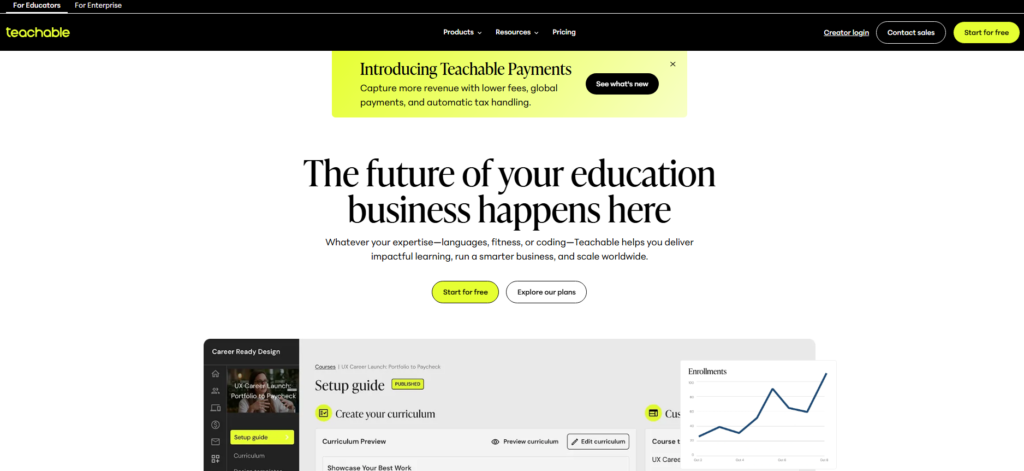
The drag-and-drop builder does not fight you. You arrange content blocks, upload videos, and write your sales page all from one clean dashboard.
What I liked most about Teachable is the philosophy baked into it. One creator put it well in a testimonial I came across: “You should never have anyone dictating the prices you charge for your content.
With Teachable, you get full control, you can talk to your students, match their learning styles, and build real relationships instead of going through third parties.”
Teachable handles payments in over 120 currencies across more than 200 countries.
Their built-in checkout includes fraud protection and tax handling, which is a real load off your plate if you sell globally.
Pros: Excellent sales page tools, graded quizzes, certificates, student referral features, AI content drafting
Cons: Transaction fees on the free and basic plans, limited community features
2. Thinkific: Best Platform for Beginners Building a Course Business
Best For: First-time course creators who want a low-risk start
Starting Price: $36/month
Free Plan: Yes
Thinkific is where I would send someone who has never built a course before.
The setup wizard walks you through everything step by step. It feels less like software and more like a checklist you tick off.
Thinkific does give up some advanced marketing depth in exchange for a smoother learning curve, and for most beginners that is the right trade.
Right alongside that beginner-friendly setup, Thinkific gives you solid analytics to track student progress, and you never pay transaction fees regardless of which plan you’re on.
That alone makes the math attractive early on.
Pros: No transaction fees on any plan, strong community features, clean interface
Cons: Marketing tools not as deep as Kajabi or Teachable, some design limits
3. LearnWorlds: Best for Creating Engaging, Professional Online Courses
Best For: Course creators who want interactive, high-quality learning experiences
Starting Price: $24/month
Free Plan: 30-day free trial
LearnWorlds surprised me the most during testing. The interactive video features, where you embed quizzes, hotspots, and clickable elements directly into video lessons, are genuinely different from what most platforms offer.
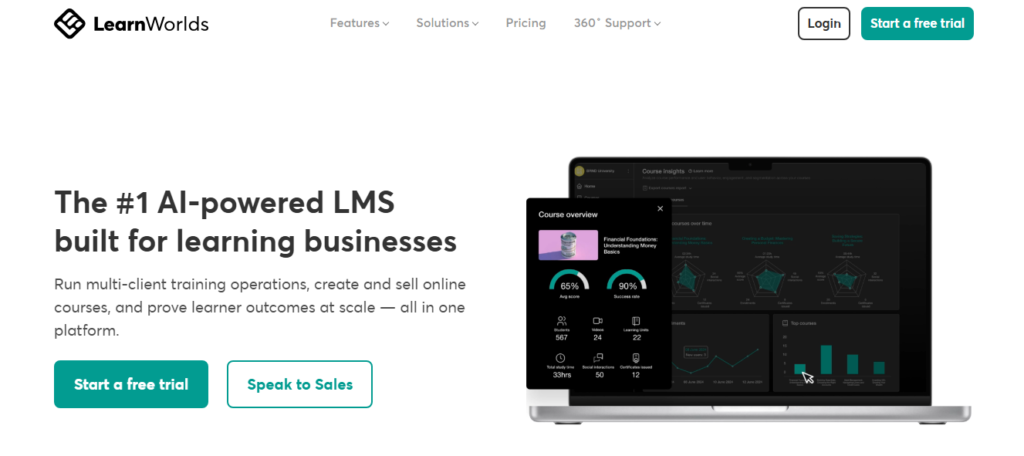
Most competitors hand you a video player and a progress bar and stop there.
LearnWorlds is trusted by 15,000+ customers around the world, and after using their AI content assistant for course planning, it is easy to see why that number keeps growing.
The tool helps you outline entire course structures from a simple topic prompt.
Pros: Interactive video, AI content assistant, white-label mobile apps, strong support resources
Cons: Steeper learning curve, higher cost for advanced plans
4. Kajabi: Best for Marketing Your Course on Autopilot
Best For: Experienced creators ready to invest in a full marketing system
Starting Price: $69/month
Free Plan: No (14-day trial available)
Kajabi is the all-in-one platform that actually delivers on that promise.
When I tested it, I found email marketing, landing pages, pipelines, and a podcast feature all working together without needing a single third-party integration.
Kajabi’s popularity comes down to the time it saves creators who would otherwise be stitching together five separate tools.
Kajabi is expensive, and there is no getting around that. If you are already earning solid revenue from courses, the time savings justify the cost.
If you’re just starting out, it may be too much platform for where you are right now.
Pros: Complete marketing automation, built-in email, community features, podcast hosting
Cons: High monthly cost, no free plan, limited student quiz depth
5. Udemy: Best Online Course Marketplace for Launching Your First Course
Best For: New creators who want instant access to a massive audience
Starting Price: Free to list
Free Plan: Yes
Udemy is one of the most popular online course marketplaces with 70 million learners: that reach is hard to ignore.
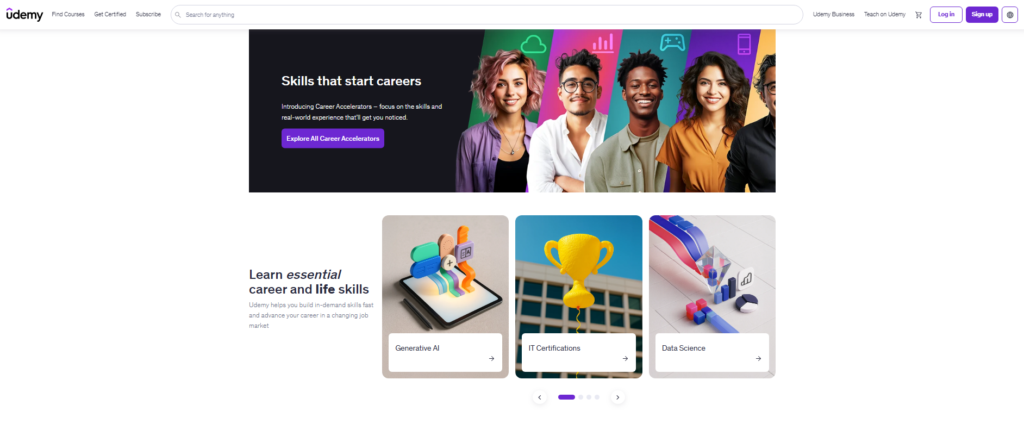
When I listed a test course on the platform, it was live within a day and visible to a global audience immediately.
Udemy’s trade-off is a real one. You give up pricing control, branding power, and direct student relationships.
Udemy frequently discounts courses across the platform, sometimes down to a few dollars, regardless of your original price. That is the cost of the traffic you get for free.
Pros: Enormous built-in audience, zero upfront cost, great for discoverability
Cons: Heavy price control by the platform, steep revenue share, limited branding
6. Skillshare: Best Marketplace for Teaching Creative Skills
Best For: Designers, illustrators, photographers, and creative professionals
Starting Price: Free to teach
Free Plan: Yes
Skillshare pays teachers based on minutes watched rather than course sales.
I tested this model and found it actually works well for short, high-value content where students binge multiple lessons.
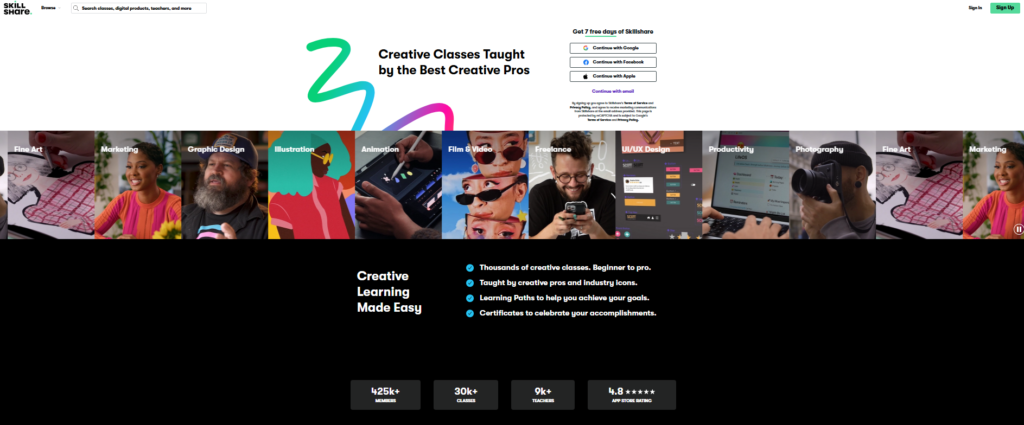
If you teach design, photography, writing, or any visual craft, Skillshare’s audience is exactly where you want to be.
One Skillshare strength that rarely gets mentioned: its community engagement features are unusually strong for a marketplace.
Students can post projects, teachers can give direct feedback, and that two-way dynamic builds loyalty fast.
Pros: Strong creative community, watch-based royalties, easy to get started
Cons: Income can be unpredictable, no course pricing control, limited business courses
7. Podia: Best for Selling Digital Products and Memberships Alongside Courses
Best For: Creators who want to bundle courses, memberships, and downloads
Starting Price: $33/month
Free Plan: Free trial available
Podia is the platform I recommend when someone says they want to sell courses and also want to sell an ebook, a membership newsletter, or a coaching session from the same storefront.
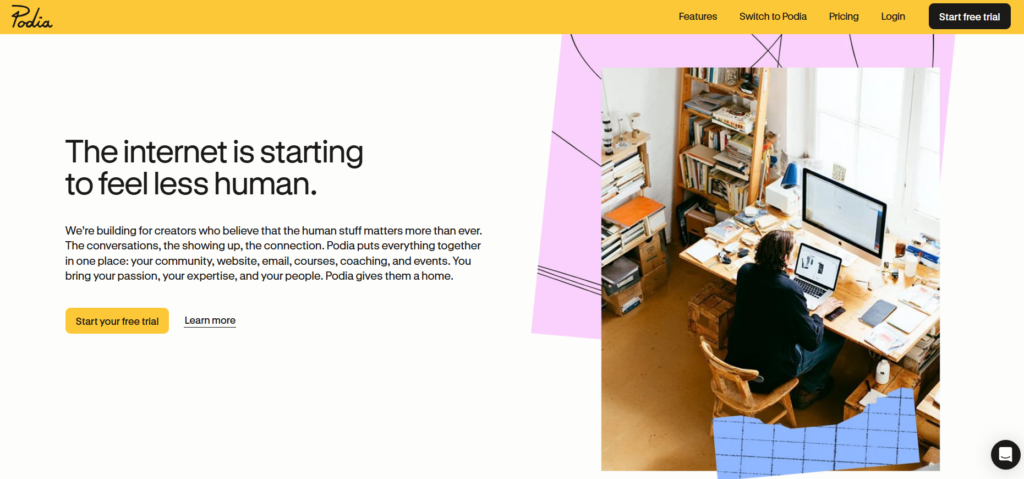
It handles all of that without requiring separate tools. The interface is clean enough that I had a full product page live in under an hour during my test.
Pros: Sells courses, memberships, downloads, coaching all in one place; no transaction fees on paid plans
Cons: Course builder less advanced than LearnWorlds or Teachable
8. Mighty Networks: Best for Building a Paid Community Around Your Course
Best For: Creators who see community as the core product, not just a bonus
Starting Price: $41/month
Free Plan: Free trial
Mighty Networks flips the traditional model. Right alongside courses, you build a living community space where members interact daily, join live events, and pay for ongoing access rather than a one-time purchase.
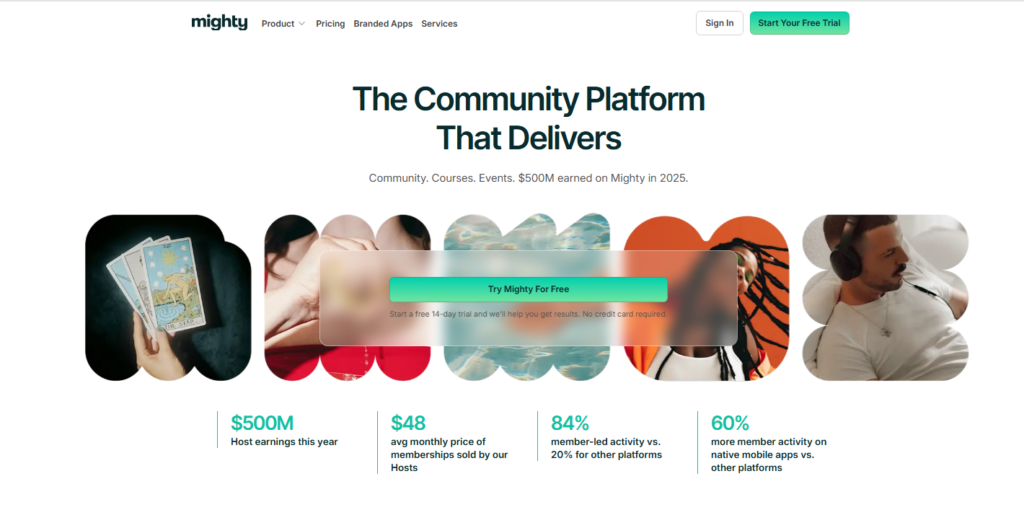
When I explored the platform, the member feed, groups, and events tools all felt more like a social network than a course site, and that is entirely the point.
Pros: Exceptional community tools, live event hosting, strong mobile apps
Cons: Course creation tools are secondary, higher transaction fees on lower plans
9. TrainerCentral: Best for Trainers Who Want a Focused, No-Fluff Platform
Best For: Professional trainers running structured training programs
Starting Price: $49/month
Free Plan: Free trial
TrainerCentral is built specifically for trainers. Not bloggers, not influencers: trainers.
What I found during testing is that the reporting and learner analytics are more detailed than most platforms at a similar price point.
If you run corporate training or certification programs, that depth matters.
Pros: Strong analytics, clean student management, good assessment tools
Cons: Smaller community than Teachable or Thinkific, fewer marketing integrations
10. Instamojo: Best for India-Based Course Creators
Best For: Creators in India selling directly to Indian learners
Starting Price: Free
Free Plan: Yes
Over 1,000 businesses use Instamojo’s online stores to sell and promote their courses.
Instamojo stands out in the Indian market because of its native payment gateway: it supports over 100 payment modes including UPI, which is essential for reaching Indian buyers.
I found the storefront setup genuinely quick, and the domain and theme options gave small businesses a professional look without design skills.
Pros: Free to start, UPI and Indian payment support, easy store builder
Cons: Limited advanced course features, best suited for the Indian market only
How I Tested and Selected These Platforms
I spent several months creating real courses, uploading actual content, running test checkouts, and reviewing student-facing experiences on each platform.
I did not rely on feature lists from company websites alone: I signed up, clicked through every menu, and pushed each tool to see where it breaks.
My selection criteria came down to five categories: course creation depth, student experience quality, sales and marketing capability, pricing transparency, and how much ownership you retain over your data and brand.
Each platform earned its spot by performing well in the categories most relevant to its target user.
Platform Comparison Table
| Platform | Transaction Fee | Built in Marketing | White Label | Best Plan Value |
|---|---|---|---|---|
| Teachable | Yes (free plan) | Strong | Yes | Pro at $119/mo |
| Thinkific | None | Moderate | Yes | Start at $36/mo |
| LearnWorlds | $5 (Starter) | Strong | Yes | Pro Trainer $79/mo |
| Kajabi | None | Best in class | Yes | Basic at $69/mo |
| Udemy | 37-63% revenue share | Platform handles it | No | Free |
| Skillshare | Royalty model | Platform handles it | No | Free |
| Podia | None (paid plans) | Moderate | Limited | Mover at $33/mo |
| Mighty Networks | 2-3% | Moderate | Limited | Community at $41/mo |
| TrainerCentral | None | Moderate | Yes | $49/mo |
| Instamojo | Small % per sale | Basic | Limited | Free to start |
Which Online Course Platform Should You Choose?
If you want the single best all-around platform, I pick Teachable. It gives you control, solid marketing tools, and a proven track record without overwhelming you with complexity.
If you want maximum reach with zero upfront investment, start on Udemy. Validate your content idea there, then migrate to your own platform once you know what sells.
If professional, interactive course quality is your top priority, go with LearnWorlds.
The interactive video tools are a genuine differentiator that I have not found anywhere else at that price point.
If community is your actual product, choose Mighty Networks. The course tools are secondary, but the community infrastructure is the best I tested.
If you are in India selling to Indian learners, Instamojo is the smart, practical starting point.
The local payment support alone makes it worth choosing over global platforms that struggle with Indian payment methods.
Frequently Asked Questions
Which platform is truly the best for selling online courses in 2026?
Teachable is my top pick for most creators because it balances ease of use, strong marketing tools, and full pricing control. The right choice depends on your goals: if community matters most, Mighty Networks wins; if reach is your priority, Udemy is hard to beat for getting started fast.
Can I sell online courses for free without paying monthly fees?
Yes. Udemy, Skillshare, and Instamojo let you list and sell courses without a monthly subscription. In reality you pay through revenue sharing or transaction fees instead. For total cost control long term, a paid plan on Thinkific or Podia usually makes more financial sense once you hit consistent sales.
What is the difference between a course platform and a course marketplace?
A platform like Teachable or Thinkific is your own branded space, you control pricing, student data, and marketing. A marketplace like Udemy brings built in traffic but dictates your prices and owns the student relationship. It is the difference between renting a market stall and building your own shop.
How much does it cost to start selling online courses?
You can start for free on Udemy or Instamojo. Paid platforms range from $24 to $69 per month at entry level. Most platforms offer a free trial, so I recommend testing your top two choices with real content before committing. Factor in transaction fees on lower tier plans when calculating your true monthly cost.
Do I need technical skills to create and sell an online course?
No. Every platform on this list uses drag-and-drop builders that require zero coding knowledge. Teachable, Thinkific, and Podia are especially beginner friendly. The biggest technical task is recording good video and even that just requires a decent smartphone and a quiet room to start.
Which platform gives me the most control over my course business?
Teachable and Kajabi give you the most control over pricing, student data, branding, and marketing. LearnWorlds is strong here too, especially with white-label mobile apps. Marketplaces like Udemy give you almost no control, because their model runs on volume traffic rather than creator autonomy.