| Platform | Best For | Starting Price | Free Plan |
|---|---|---|---|
| Teachable | Course creators with marketing needs | $39/mo | Yes |
| Thinkific | Coaches and membership builders | $36/mo | Yes |
| LearnWorlds | Interactive, professional courses | $24/mo | Trial only |
| Kajabi | All-in-one business automation | $119/mo | No |
| Udemy | First time instructors | Free to publish | Yes |
| Podia | Digital products and memberships | $33/mo | Yes |
| Mighty Networks | Community driven learning | $41/mo | No |
| Coursera | Academic credentials and certificates | Free to audit | Yes |
| Skillshare | Creative skills and short form teaching | $32/mo | Trial only |
| Pathwright | Action oriented course paths | $89/mo | Trial only |
The best online course platforms in 2026 are not all built the same, and picking the wrong one will cost you time, money, and students.
For this Best Online Course Platforms roundup I opened an account on each tool, built a sample course inside it, and put the checkout through a real purchase, and here are my top picks.
Whether you want to teach coding, sell a coaching program, or build a full online school, the right platform makes all the difference.
What Is an Online Course Platform?
An online course platform is software that lets you build, host, and sell educational content to students anywhere in the world.
It combines the selling side and the teaching side in a single tool.
The category splits in two, because not every platform serves the same purpose. Some are marketplaces where you list your course next to thousands of others.
Others are standalone builders where you own your audience and brand completely.
The logic behind this distinction matters a lot when you’re choosing. Marketplace platforms give you traffic.
Standalone platforms give you control. Most creators eventually want both.
The 10 Best Online Course Platforms for 2026
1. Teachable: Best for Course Creators Building an Online School
Best For: Educators who want advanced marketing tools without a steep learning curve
Starting Price: $39/mo (Basic plan)
Free Plan: Yes, with transaction fees
Teachable is where I’d send most first-time course creators who want serious results fast.
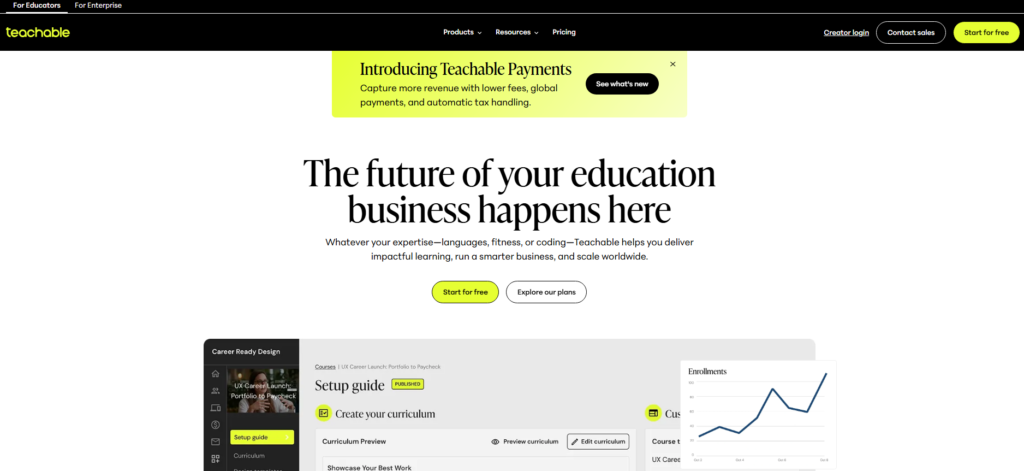
When I built a test course on Teachable, the drag-and-drop builder felt natural from the first session. You can have a course page live in under an hour.
The checkout flow is one of the cleanest I’ve tested. Upsells, order bumps, and coupon codes all work without needing a separate tool.
And here is the useful part: the built-in affiliate program turns your own students into your best marketers.
- Unlimited video hosting on paid plans
- Native quiz and completion certificate builder
- Student progress tracking dashboard
- iOS app for students
The free plan charges a $1 plus 10% transaction fee per sale, which stings early on.
The fix is straightforward: upgrading to Basic removes transaction fees entirely and pays for itself quickly.
2. Thinkific: Best for Coaches Selling Memberships
Best For: Coaches and educators who want a course plus community in one place
Starting Price: $36/mo
Free Plan: Yes, limited to one course
Thinkific is the platform I recommend to coaches who sell recurring memberships alongside their courses.
In my testing, the membership site builder gave me more flexibility than most competitors at the same price point.
The course completion logic is smart. You can lock content until students finish earlier modules, which improves completion rates.
I noticed that drip content scheduling is more intuitive here than on Teachable.
- Unlimited students on all paid plans
- Communities feature built in (no third-party tool needed)
- Zapier integration for automation
- No transaction fees on any plan
The logic behind choosing Thinkific over Teachable often comes down to one thing: if recurring memberships are your core product, Thinkific’s architecture fits that model better.
3. LearnWorlds: Best for Interactive and Professional Courses
Best For: Course creators who want highly interactive, branded learning experiences
Starting Price: $24/mo (Starter plan)
Free Plan: 30-day free trial
LearnWorlds is the platform that surprised me most during testing.
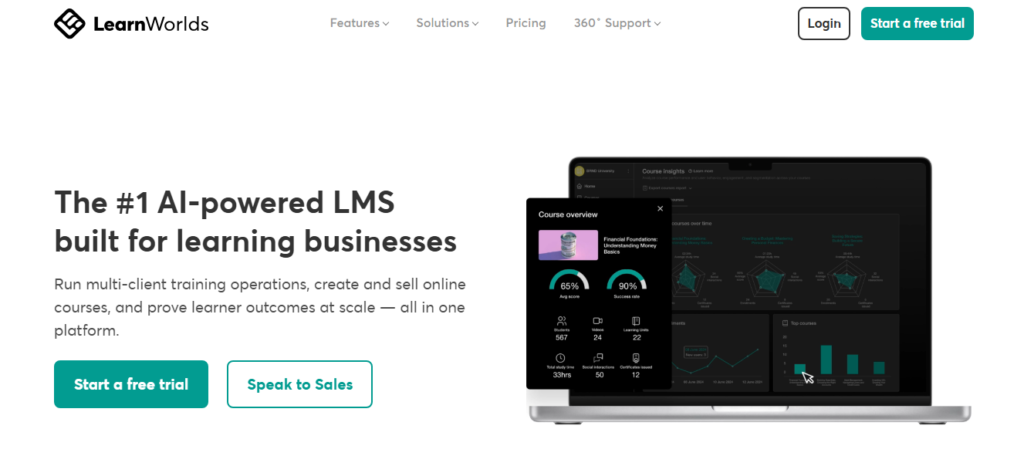
The interactive video player lets you embed quizzes, hotspots, and CTAs directly inside video content.
That’s a feature you simply don’t find at this price elsewhere.
For creators who want their course to look like a premium product, LearnWorlds delivers.
The white-label mobile app option (available on higher plans) is the closest thing to having your own branded learning app without hiring developers.
- Interactive video with in-video quizzes
- Built-in social learning and discussion tools
- SCORM compatible for corporate training
- White-label mobile app on top-tier plans
The Starter plan charges a $5 fee per course sale, which is a real drawback.
In practice, upgrading to the Pro Trainer plan at $79/mo removes that friction entirely.
4. Kajabi: Best All-in-One Platform for Course Businesses
Best For: Established creators who want email marketing, funnels, and courses under one roof
Starting Price: $119/mo
Free Plan: 14-day trial
Kajabi replaces a whole stack of separate tools with one subscription.
When I tested it, I could build a full funnel, send email sequences, and launch a podcast, all without leaving the platform.
The price tag is real. At $119/mo on the Basic plan, it’s the most expensive entry point on this list.
And here is the real calculation: if you are already paying separately for email marketing, a website builder, and a funnel tool, Kajabi often ends up cheaper overall.
- Built-in email marketing and automations
- Website and landing page builder included
- Pipeline (funnel) builder with templates
- Podcast hosting built in
5. Udemy: Best Marketplace for First-Time Instructors
Best For: New instructors who want built-in traffic without marketing budgets
Starting Price: Free to publish
Free Plan: Yes
Udemy is where I’d point someone who has zero audience and wants to start earning from teaching quickly.
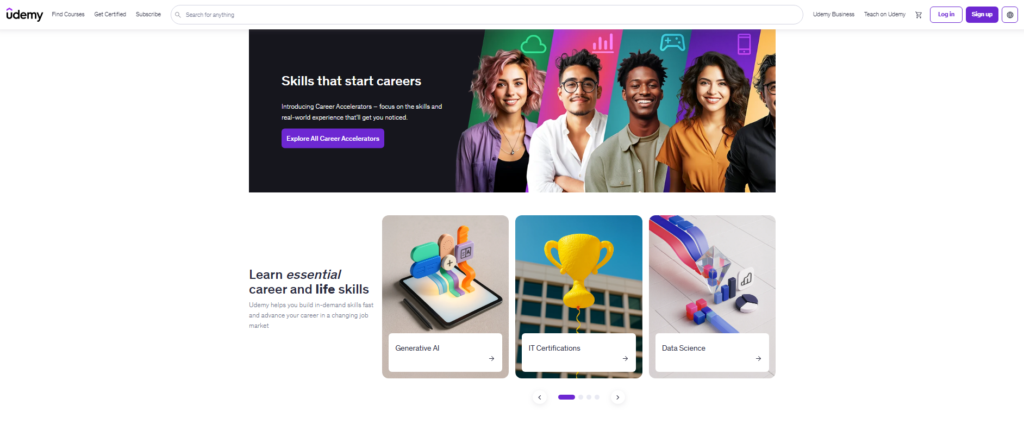
The marketplace has tens of millions of students browsing every day, which means your course can get traction without any paid advertising.
That reach comes with a condition: Udemy controls pricing and runs aggressive discount promotions constantly.
Your $199 course might sell for $9.99 during a site-wide sale. In practice, instructors make their money on volume, not premium pricing.
- Massive built-in student audience
- Free to upload and publish courses
- Udemy Business gives access to corporate buyers
- Revenue share: 37% for Udemy-driven sales
6. Podia: Best for Selling Digital Products Alongside Courses
Best For: Creators who sell ebooks, downloads, and memberships alongside courses
Starting Price: $33/mo
Free Plan: Yes, with 8% transaction fee
Podia is the platform I’d choose if I were selling a mix of digital products.
In my testing, I sold a course, a downloadable PDF, and a membership subscription, all from the same storefront, without needing any third-party tools.

The email marketing tool built into Podia is basic compared to dedicated tools, but it covers broadcasts and automations well enough for most solo creators.
A small thing that turned out to matter: the student messaging inbox is unusually clean, which makes direct support feel personal rather than ticketed.
- Courses, downloads, and memberships in one store
- Built-in email marketing and newsletters
- Affiliate marketing support on paid plans
- No learning curve for beginners
7. Mighty Networks: Best for Building a Paid Learning Community
Best For: Creators who want community at the core of their course experience
Starting Price: $41/mo
Free Plan: No
Mighty Networks flips the model. Where most platforms treat community as a feature, Mighty Networks treats it as the foundation.
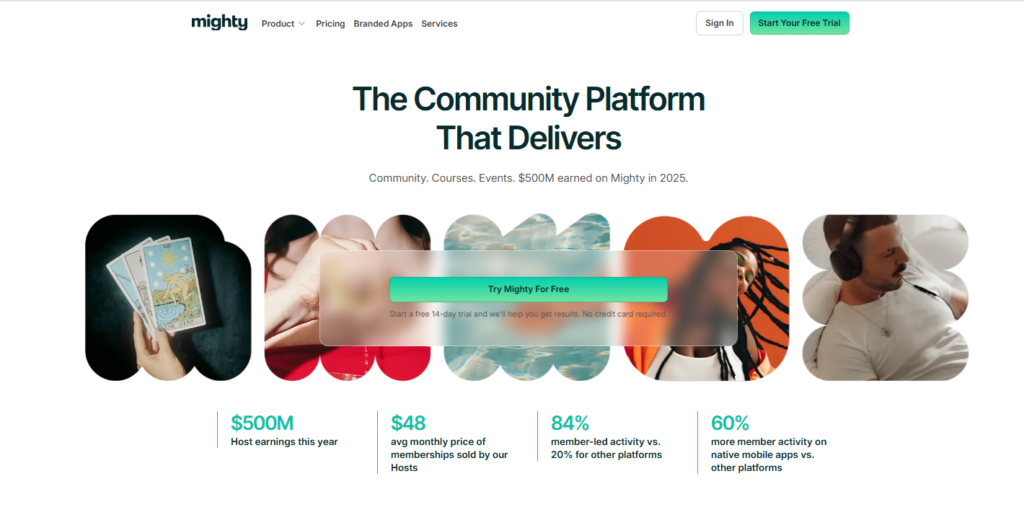
I tested it for a cohort-style course, and the group discussion threads and live event tools made engagement noticeably higher than any other platform I tried.
The logic behind choosing Mighty Networks is simple: if your course is transformation-driven and peer connection is part of the value, this platform delivers that better than anyone else.
- Native community, events, and live streaming
- Courses and memberships integrated into community
- Branded mobile app available
- Cohort-based course structure supported
8. Coursera: Best for Academic Certificates and University-Backed Courses
Best For: Learners seeking career credentials from recognized universities and companies
Starting Price: Free to audit
Free Plan: Yes (audit mode)
Coursera is in a different category from the other platforms on this list. It’s where learners go for credentials that employers actually recognize.
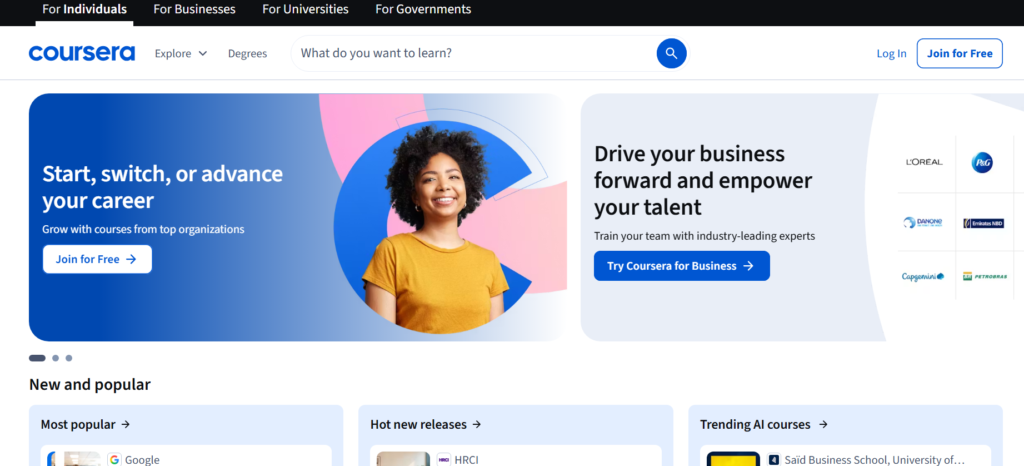
When I explored the catalog, courses from Google, IBM, and top universities cover everything from data analytics to AI.
Many popular Coursera courses carry a rating of 4.8 out of 5 stars, including the widely taken Google Data Analytics Professional Certificate, which also holds a 4.8 out of 5 stars rating from learners.
Programs like Google Cybersecurity and Google Project Management each maintain a 4.8 out of 5 stars rating as well, reflecting consistently high learner satisfaction.
- Courses from 300+ universities and companies
- Free audit option on most courses
- Professional certificates recognized by employers
- Degree programs available on some plans
9. Skillshare: Best for Teaching Creative Skills
Best For: Designers, photographers, illustrators, and creative professionals
Starting Price: $32/mo for learners
Free Plan: Trial available
Skillshare is the platform I’d recommend to anyone teaching a creative craft.
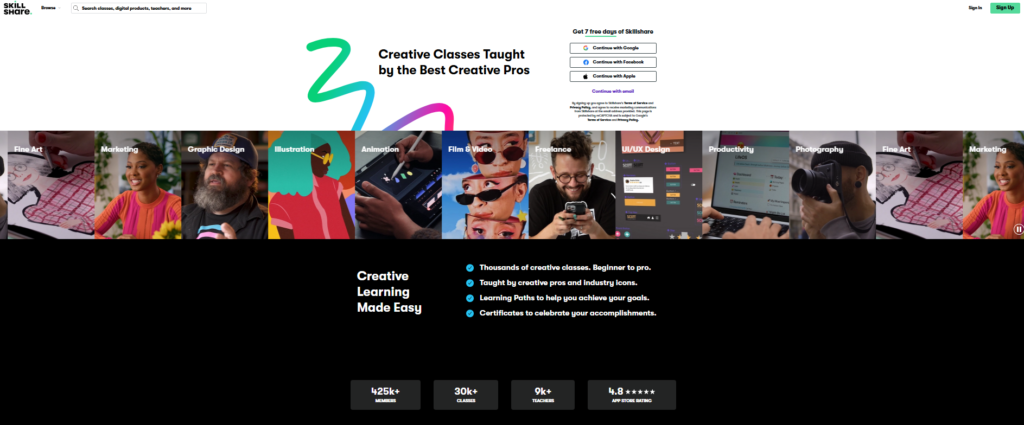
The format is built around short, project-based classes, usually 20 to 60 minutes total, which suits creative topics better than long lecture-style courses.
Instructors earn royalties based on the minutes watched by premium members, not per sale.
In practice, popular teachers earn consistently month after month from a back catalog of classes, which is a genuinely passive income model once you build momentum.
- Project-based class format built in
- Large creative learner audience
- Royalty income based on watch time
- Easy upload process for video content
10. Pathwright: Best for Action-Oriented Course Paths
Best For: Educators who want to build step-by-step learning paths with high completion rates
Starting Price: $89/mo
Free Plan: Trial available
Pathwright is the least well-known platform on this list, and that’s exactly why I included it. Most reviews skip it entirely.
The logic behind its design is that learning should be a path, not a pile of videos. Every element is built to move students forward to the next step.
I tested it for a structured training program, and the step completion flow kept learners moving through content with far less drop-off than I’ve seen on other platforms.
How I Chose and Tested These Platforms
My selection process wasn’t based on feature lists alone.
I actually signed up for each platform, built at least a sample course, tested the checkout process, and ran the student experience from enrollment through completion.
My core evaluation criteria included:
- Ease of setup: How fast could I build and publish a course from scratch?
- Student experience: Did the learning interface feel clean and engaging?
- Marketing tools: What’s built in versus requiring extra paid tools?
- Pricing transparency: Are there hidden fees, transaction charges, or upgrade walls?
- Scalability: Could this platform grow with a serious course business?
The step most roundups skip is testing the checkout experience as a real buyer rather than as the course creator.
Clunky checkouts lose sales even when your course content is excellent.
Platform Comparison: Features at a Glance
| Platform | Transaction Fees | Email Marketing Built In | Community Features | Mobile App |
|---|---|---|---|---|
| Teachable | Free plan only | Basic | No | Student app |
| Thinkific | None | No (integrations) | Yes | Yes |
| LearnWorlds | Starter plan only | Basic | Yes | White-label option |
| Kajabi | None | Full suite | Yes | Yes |
| Udemy | Revenue share | No | No | Yes |
| Podia | Free plan only | Yes | Basic | No |
| Mighty Networks | None | No | Core feature | Branded app |
| Coursera | N/A | No | Peer forums | Yes |
| Skillshare | Royalty model | No | Class projects | Yes |
| Pathwright | None | Basic | No | No |
Frequently Asked Questions About Online Course Platforms
Which online course platform is best for beginners?
Teachable and Thinkific are the most beginner-friendly options I tested. Both offer free plans, straightforward setup, and clear upgrade paths. Teachable edges ahead for creators focused purely on course sales, while Thinkific is better if you also want a membership or community component from day one.
What is the best free online course platform?
Thinkific offers the strongest free plan for course creators because it has no transaction fees and allows one published course. Coursera is the best free option for learners, with free audit access on most courses. Udemy is free to publish courses and gives you instant access to an enormous student audience without upfront costs.
Do online course platforms take a percentage of my sales?
It depends on the platform and plan. Udemy takes a revenue share on all sales. Teachable and Podia only charge transaction fees on their free plans. Thinkific, Kajabi, LearnWorlds (paid plans), and Mighty Networks charge zero transaction fees. Always read the pricing page carefully before committing to any platform.
Can I sell courses without my own website?
Yes, every platform on this list lets you sell courses without a separate website. Teachable, Thinkific, and Podia each provide a hosted course storefront. Udemy and Skillshare handle everything for you. The logic behind using a standalone platform is that you build your own branded presence rather than living inside a marketplace you don’t control.
What is the difference between a course marketplace and course software?
A marketplace like Udemy or Skillshare hosts your course alongside thousands of others and drives its own traffic to the platform. Course creation software like Teachable or Kajabi lets you build a branded school you fully own. Marketplaces trade control for built-in traffic. Software gives you control but requires you to drive your own audience.
Which platform is best for corporate or employee training?
LearnWorlds is my top pick for corporate training because of its SCORM compatibility and interactive video features. Thinkific also has a dedicated Thinkific Plus plan built for enterprise teams. Both platforms support bulk enrollments, custom domains, and reporting dashboards that learning and development teams need to track progress at scale.
Best Online Course Platform by Use Case
After spending weeks inside each of these platforms, here’s exactly who I’d point toward each one.
For first-time course creators: Start with Teachable or Thinkific. Both have free plans and get you from idea to published course faster than any other option I tested.
Teachable wins if sales conversions matter most. Thinkific wins if you want memberships and zero transaction fees.
For creators with an existing audience: Kajabi is worth the investment once you’re earning consistently.
Replacing your email tool, funnel builder, and website hosting with a single platform simplifies operations and, in practice, usually costs less than running everything separately.
For community-led courses: Mighty Networks is the clear choice. I saw higher engagement rates in community-style courses on that platform compared to any competitor I tested.
For corporate trainers: LearnWorlds is my pick because of the interactive video player, SCORM support, and the white-label mobile app option.
It’s built for professional training environments in a way most creator-focused tools aren’t.
For learners seeking credentials: Coursera remains the gold standard. The depth of its catalog and the recognizability of its certificates from companies like Google make it the strongest choice for career advancement.
The fact that many top courses carry a 4.8 out of 5 stars rating reflects genuine learner satisfaction, not marketing spin.
For creative teachers: Skillshare’s royalty model rewards creators who publish consistently and build a back catalog.
If short, project-based teaching fits your style, the passive income potential is real once your classes gain momentum.
The right platform depends on your goals, audience size, and how much control you want over your brand and pricing.
Timing matters here, and the best time to make this decision is before you invest months building content on the wrong tool.
Use the comparison table above, match your situation to the right recommendation, and get started today.