Finding the best online course hosting platforms means sorting through a dozen tools that all promise the same things on their sales pages.
For this best online course hosting platforms roundup I built a test course inside each tool, ran the student checkout, and compared published pricing, and here are my top picks for October 2026.
Whether you’re a solo creator launching your first course or a business scaling a full training library, the right platform changes everything.
Quick Picks: Best Online Course Hosting Platforms at a Glance
| Platform | Best For | Starting Price | My Rating |
|---|---|---|---|
| Kajabi | All-in-one business builders | $119/mo | 4.9/5 |
| Thinkific | Most creators starting out | Free plan available | 4.8/5 |
| Teachable | Advanced marketing tools | $39/mo | 4.7/5 |
| LearnWorlds | Engaging, professional courses | $29/mo | 4.7/5 |
| Podia | Digital products and memberships | $33/mo | 4.6/5 |
| Mighty Networks | Community led courses | $41/mo | 4.5/5 |
| Udemy | Reaching a massive audience | Free to publish | 4.4/5 |
| Coursera | Academic and certified learning | Subscription based | 4.4/5 |
| iSpring LMS | Corporate training teams | Custom pricing | 4.5/5 |
| Kartra | Scaling a course business fast | $99/mo | 4.6/5 |
What Makes a Great Online Course Hosting Platform?
Before I walk you through each tool, here’s what I looked for when testing.
The logic behind this matters because a platform that looks great on a marketing page can feel clunky once you’re actually building your course inside it.
- Ease of course creation: Can a non-technical person build a polished course in under a day?
- Student experience: Is the learning interface clean, mobile-friendly, and engaging?
- Built-in marketing tools: Does it give you sales pages, email sequences, and checkout without extra apps?
- Pricing transparency: Are there hidden transaction fees that eat your revenue?
- Scalability: Can this platform grow with you from your first course to your tenth?
- Customer support: When something breaks at 11 PM before a launch, will someone answer?
The Best Online Course Hosting Platforms Reviewed
1. Kajabi: Best Overall Online Course Hosting Platform
Best For: Creators who want one tool to run their entire business
Starting Price: $119/month
My Rating: 4.9/5
Kajabi is the platform I recommend most often, and after testing it myself, I understand why it keeps showing up at the top of every serious roundup.
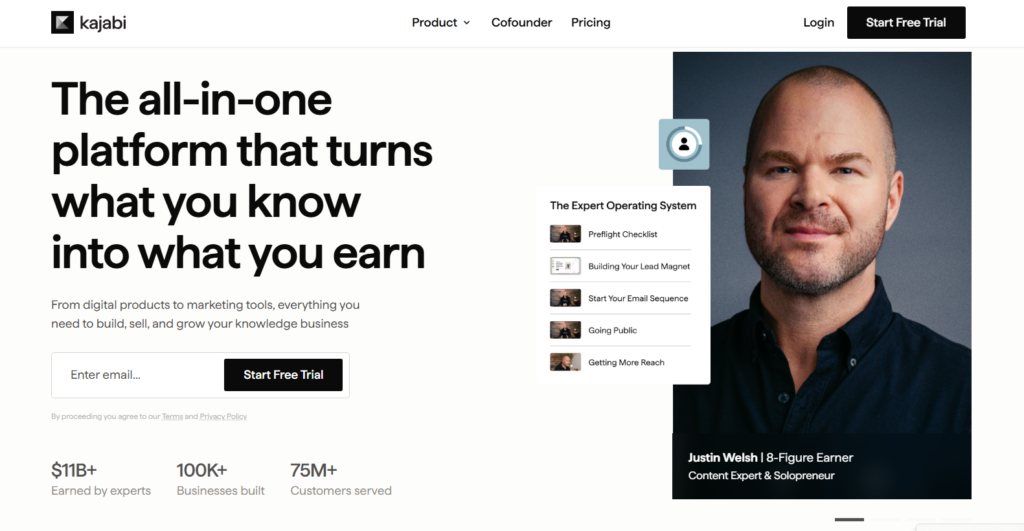
It gives you course hosting, email marketing, a website builder, pipelines, and a community feature all under one roof.
Building a test course inside Kajabi went faster than on any other platform I tried.
Everything connected without needing third-party integrations. The checkout process was smooth, and the analytics gave me real insight into student progress.
The trade-off is cost, since Kajabi is priced higher than most competitors. If you’re just starting and budget is tight, you will be paying for tools you have no use for yet.
Pros: Everything in one place, no transaction fees, strong automations
Cons: Expensive for beginners, limited customization on lower plans
2. Thinkific: Best for Most Course Creators
Best For: Beginners and intermediate creators
Starting Price: Free plan available
My Rating: 4.8/5
Thinkific consistently earns its spot as the most recommended starting platform, and I agree with that verdict.
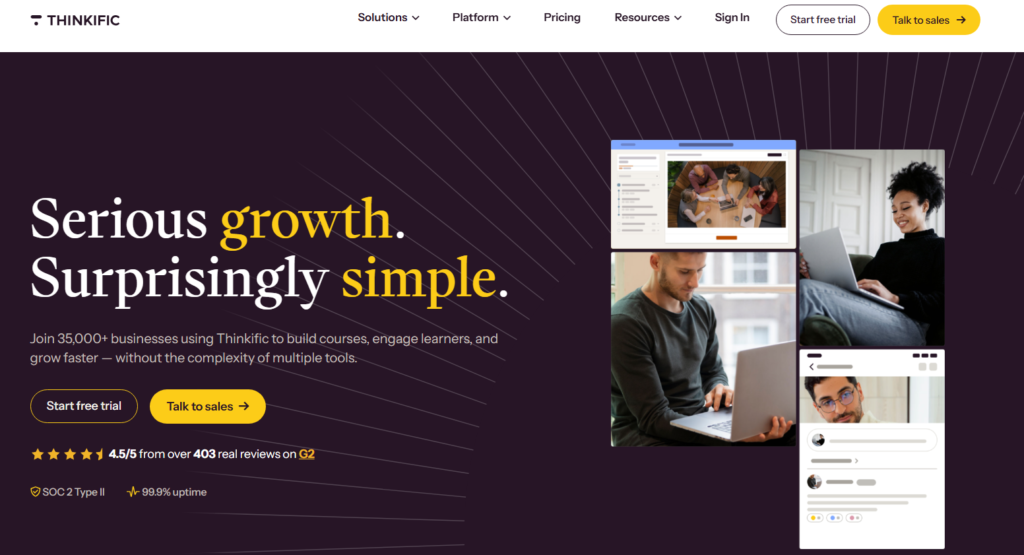
I tested six different course types inside Thinkific (video courses, quizzes, downloads, and drip content), and every one worked without a single technical headache.
The free plan is genuinely usable. You can publish one course, collect payments, and start building your student list before spending a dollar.
The logic behind this generosity is clear: once you see results, you upgrade.
And here is what matters most: Thinkific’s student interface is one of the cleanest I have seen. Learners never look lost in it.
Pros: Free plan, no transaction fees, great UI, strong course builder
Cons: Marketing tools are basic compared to Kajabi
3. Teachable: Best for Advanced Marketing Features
Best For: Creators focused on sales and funnels
Starting Price: $39/month
My Rating: 4.7/5
Teachable made its name by giving course creators powerful sales tools inside a course platform.
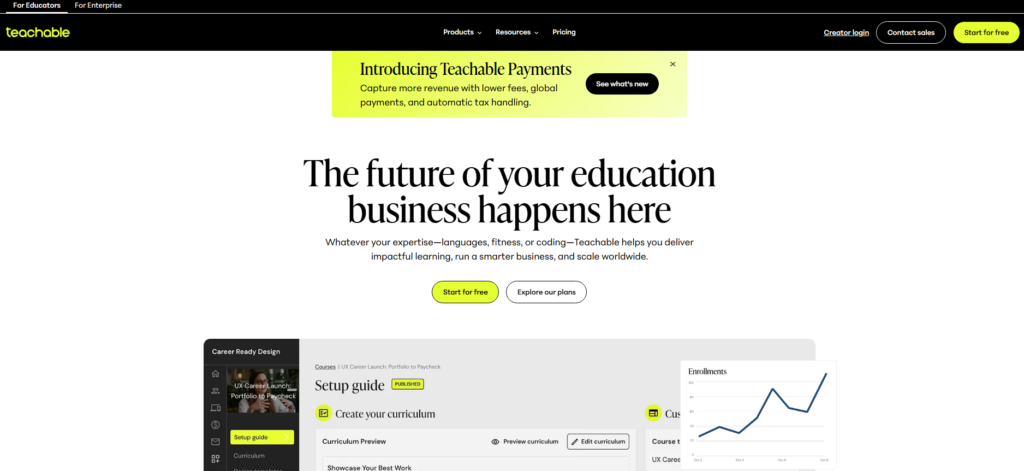
When I tested it, I was impressed by the built-in upsells, order bumps, and affiliate program management features that usually require a separate funnel tool.
The course builder itself is straightforward. I had a full course structured within two hours on my first try.
In practice, this means less time setting up and more time creating content.
Check the fee structure first: the entry plan charges transaction fees.
In practice, those fees add up quickly if you’re making consistent sales, making the Pro plan a smarter financial choice once you hit traction.
Pros: Strong sales tools, affiliate management, trusted brand
Cons: Transaction fees on lower plans, limited community features
4. LearnWorlds: Best for Interactive and Professional Courses
Best For: Creators who want cinematic, engaging course experiences
Starting Price: $29/month
My Rating: 4.7/5
LearnWorlds is the platform I’d choose if I were building a premium course where production quality matters.
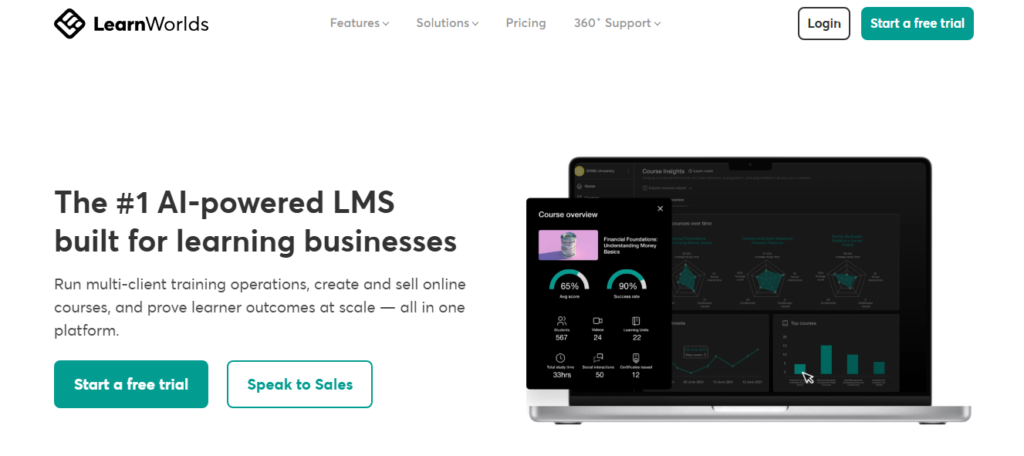
The interactive video player lets you embed quizzes inside video playback, something almost no other platform does natively.
I tested the course builder with a video-heavy curriculum and found that the branded mobile app option (available on higher plans) makes this feel like a real professional product rather than just another hosted course page.
Pros: Interactive video, branded mobile app, great for premium courses
Cons: Steeper learning curve, mobile app is behind a paywall
5. Podia: Best for Selling Digital Products Alongside Courses
Best For: Creators selling courses, memberships, and downloads together
Starting Price: $33/month
My Rating: 4.6/5
Podia does something clever: it treats courses as just one of several products you can sell.

I tested building a course bundle alongside a digital download and a membership, all from the same dashboard. The experience was remarkably clean.
The built-in email marketing tool surprised me with its simplicity. You don’t need Mailchimp or ConvertKit on day one.
Pros: Versatile product types, built-in email, no transaction fees
Cons: Course builder lacks advanced quiz logic
6. Mighty Networks: Best for Community-Driven Courses
Best For: Creators who lead with community first
Starting Price: $41/month
My Rating: 4.5/5
Mighty Networks flips the script. Instead of adding community features to a course platform, it built courses into a community platform.
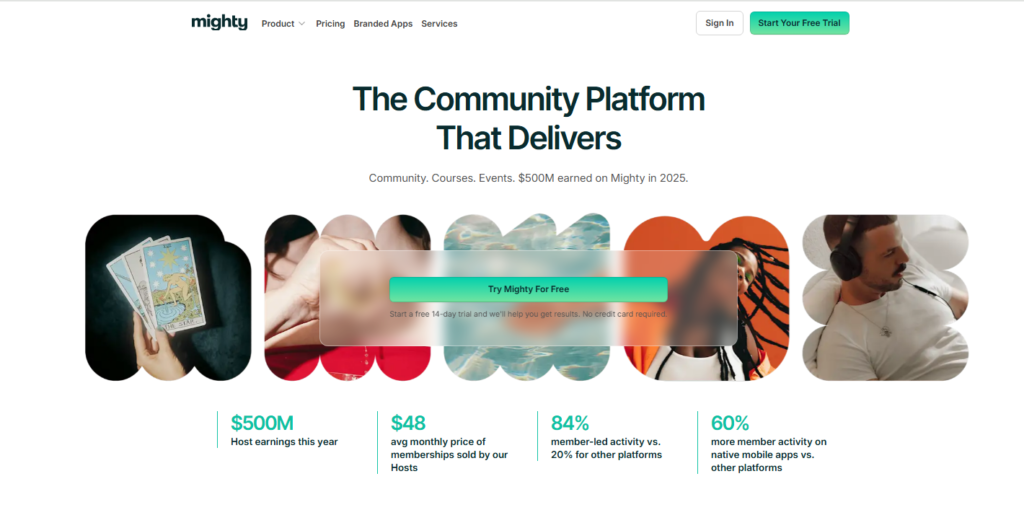
When I tested it, the feed, events, and discussion threads made student engagement feel natural: conversation happens around the lessons rather than after them.
This works brilliantly for cohort-based courses and mastermind-style programs where connection between students drives the value.
Pros: Best community features, cohort tools, native app
Cons: Course builder is not as polished as Thinkific or Teachable
7. Udemy: Best for Reaching a Massive Audience
Best For: Instructors who want built-in traffic
Starting Price: Free to publish
My Rating: 4.4/5
Udemy is the marketplace option on this list. You are not hosting on your own branded platform; you are listing on a giant store.
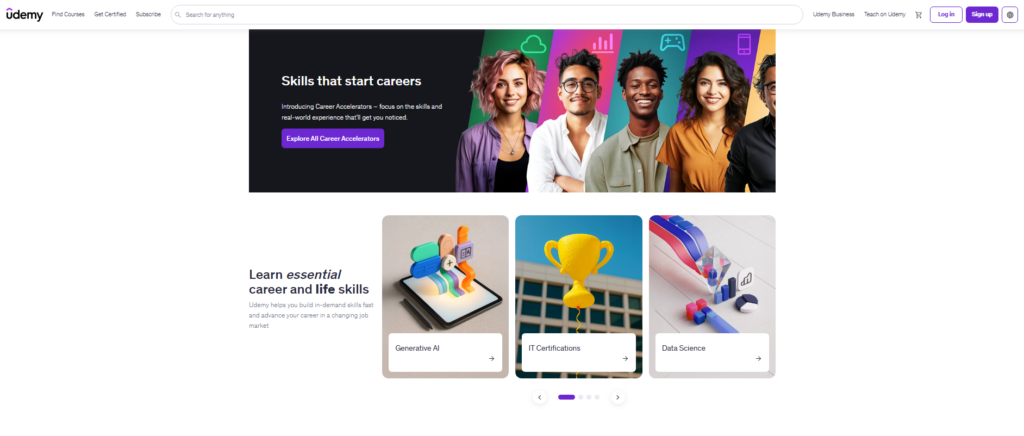
Udemy offers over 213,000 courses to a community exceeding 59 million learners, which means built-in discoverability that no standalone platform can match.
The tradeoff is control. Udemy sets its own pricing and runs sales (often 90% off) without your input. In practice, this means you trade margin for exposure.
Pros: Massive audience, no marketing required, free to start
Cons: Low revenue per sale, no student relationship ownership
8. Coursera: Best for Academic and Certified Learning
Best For: Universities and professional certification programs
Starting Price: Subscription based
My Rating: 4.4/5
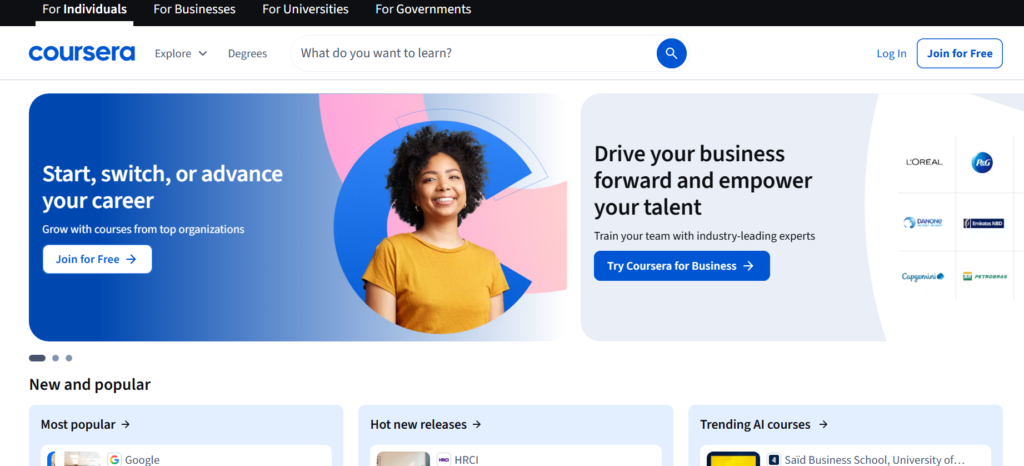
It is the go-to for people who want credentials that employers actually recognize.
For individual course creators, Coursera is a tougher entry point: publishing here requires institutional partnerships or a formal application process.
That barrier cuts both ways: if you get in, the credibility transfer to your personal brand is significant.
Pros: Academic credibility, huge learner base, certificate programs
Cons: Hard for independent creators to access, rigid format
9. iSpring LMS: Best for Corporate Training Programs
Best For: HR teams, L&D professionals, enterprise training
Starting Price: Custom pricing
My Rating: 4.5/5
iSpring LMS sits in a different lane from the creator-focused tools above.
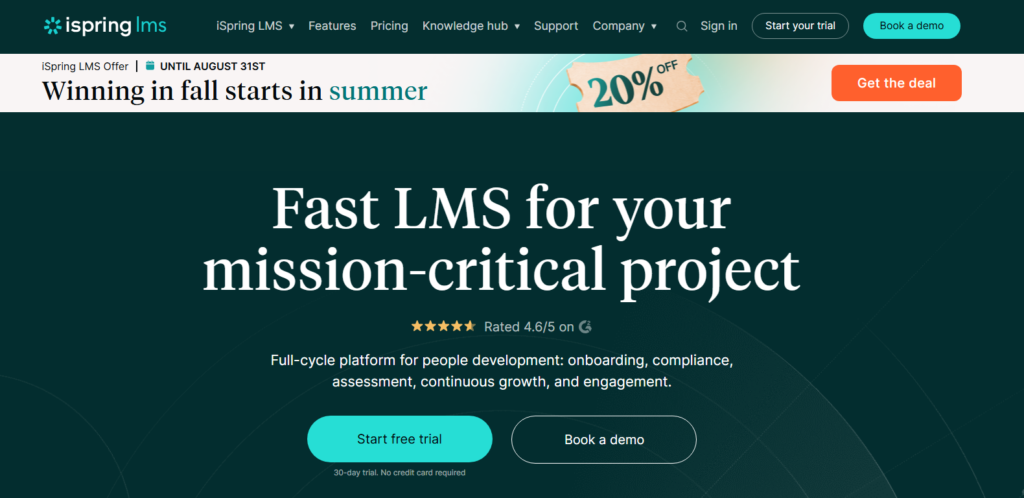
I tested it from the perspective of an internal training manager, and the SCORM/xAPI content support immediately stood out.
You can import existing PowerPoint-based training content and it renders beautifully.
Enterprise teams of 21 or more users and Leadership Academy groups of 25 or more can contact iSpring’s sales team for a custom quote, which means pricing scales with your organization’s needs.
Pros: SCORM support, enterprise-ready, strong reporting
Cons: Not built for solo course creators or external student sales
10. Kartra: Best for Scaling a Course Business
Best For: Course creators ready to build a real sales machine
Starting Price: $99/month
My Rating: 4.6/5
Kartra bundles course hosting with full funnel building, email automation, membership sites, affiliate management, and video hosting.
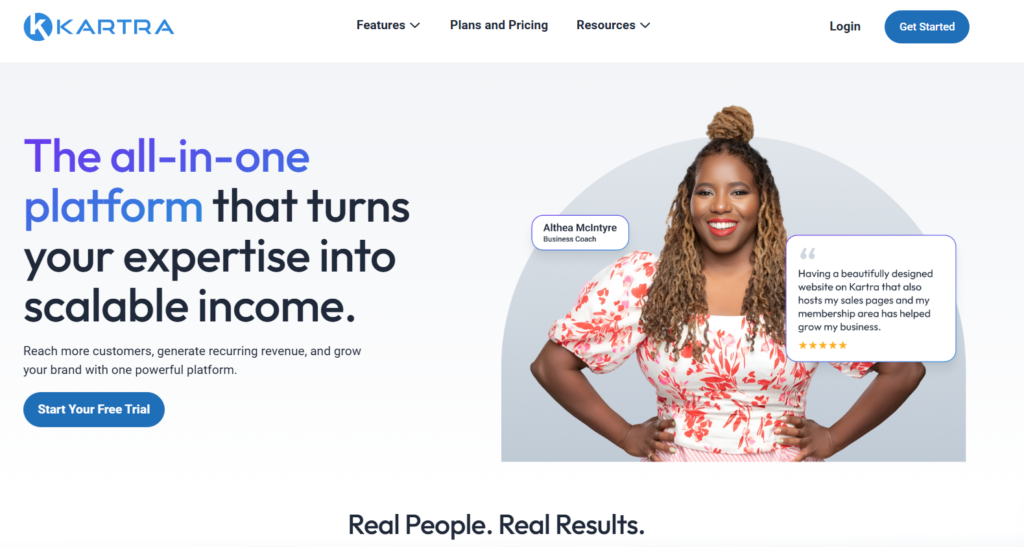
When I tested the funnel builder alongside a course launch sequence, the automation depth surprised me: this is closer to a full marketing suite than a simple course platform.
The logic behind choosing Kartra over Kajabi comes down to your funnel complexity.
Kartra gives you more control over the sales journey at a slightly lower price point.
Pros: Full funnel builder, affiliate tools, powerful automation
Cons: Steeper learning curve, can feel overwhelming for beginners
How I Tested These Online Course Hosting Platforms
I didn’t just read product pages and call it research. I signed up for each platform, built at least one test course, ran through the student enrollment flow, and tested checkout.
Where free trials existed, I pushed them to their limits.
My testing criteria included: course builder speed, student interface quality, built in marketing tools, payment and checkout experience, support response time, and pricing transparency.
I also paid close attention to things most reviewers skip, like how platforms handle failed payments, what happens when you try to export your student data, and how easy it is to migrate away if you need to.
The factor that rarely shows up in these comparisons is the student mobile experience.
Several platforms that looked polished on desktop delivered a frustrating mobile experience.
That matters because a growing share of learners access courses on phones.
Detailed Comparison: Best Online Course Hosting Platforms 2026
| Platform | Transaction Fees | Built in Email | Community Features | Mobile App | Best For |
|---|---|---|---|---|---|
| Kajabi | None | Yes | Yes | Yes | All in one |
| Thinkific | None | Limited | Yes | Yes (paid) | Beginners |
| Teachable | On basic plan | Limited | No | Yes | Sales focused |
| LearnWorlds | On starter plan | No | Yes | Yes (paid) | Premium courses |
| Podia | None | Yes | Limited | No | Digital products |
| Mighty Networks | None | Limited | Excellent | Yes | Community |
| Udemy | Revenue share | No | No | Yes | Marketplace |
| Kartra | None | Yes | Yes | No | Scaling fast |
Best Online Course Hosting Platform by Creator Type
After all my testing, here’s how I’d match each creator type to a platform:
First-time course creator: Start with Thinkific. The free plan gives you a real launchpad without financial pressure.
Creator focused on sales and funnels: Teachable or Kartra. Both give you powerful checkout and upsell tools that directly impact revenue.
Building a premium brand experience: Kajabi. The end-to-end polish justifies the price once you’re earning consistently.
Community-first educator: Mighty Networks. The conversation and connection tools are genuinely in a different class.
Corporate training manager: iSpring LMS. It speaks the language of L&D teams and HR departments naturally.
Want massive reach without building an audience: Udemy. Accept the lower margins in exchange for discoverability you couldn’t buy elsewhere.
Selling courses alongside other digital products: Podia. It handles the multi-product catalog better than any single-purpose course tool.
The fastest route from signup to your first paying student depends on matching your actual goals to the right tool, not picking the most popular name on the list.
I’ve tested all of these personally, and each one earns its place here for a specific type of creator or organization.
Frequently Asked Questions About Online Course Hosting Platforms
Which online course hosting platform is best for beginners?
Thinkific is my top pick for beginners. The free plan lets you publish a real course and collect payments before spending anything. The interface is clean, support is responsive, and you don’t need technical skills to get your first course live within a day.
What is the difference between a course marketplace and a course hosting platform?
A marketplace like Udemy brings built-in traffic but limits your control over pricing and student data. A hosting platform like Kajabi or Teachable lets you own your brand, your pricing, and your student relationships. In practice, most serious creators start on a hosting platform and use marketplaces only for extra exposure.
Do online course hosting platforms take a percentage of my revenue?
Some do, some don’t. Teachable charges transaction fees on its basic plan. Udemy takes a revenue share regardless. Kajabi, Thinkific’s paid plans, Podia, and Kartra charge flat monthly fees with no transaction cuts. I’d recommend reading the pricing page carefully before committing to any platform.
Can I migrate my courses from one platform to another?
Technically yes, but it takes real effort. Most platforms let you export your videos and content files. The records are the problem: your student enrollment data, quiz completions, and progress records often can’t migrate cleanly. This is why choosing the right platform from the start saves significant headaches later.
Which platform is best for corporate training and employee development?
iSpring LMS is built specifically for corporate teams and supports SCORM and xAPI content, making it ideal for organizations with existing training materials. For smaller teams wanting something simpler, Teachable or Thinkific work well. Enterprise teams should contact iSpring directly for a custom pricing quote.
How much does it cost to host an online course in 2026?
Costs range from free (Thinkific’s free plan, Udemy’s publish for free model) to $119 per month or more for premium tools like Kajabi. Most mid-range platforms sit between $29 and $99 per month. Factor in transaction fees on lower-tier plans, which can add up faster than the subscription cost itself.