The erank vs sale samurai debate is one I kept running into while trying to grow my Etsy shop last year and I finally decided to stop guessing and just test both tools back to back.
The choice matters more than the price tags suggest. The right tool decides whether your listings sit buried on page nine of Etsy search or show up where buyers are actually looking.
Here’s my honest breakdown after weeks of hands-on use.
Quick Verdict: eRank vs Sale Samurai at a Glance
| Category | Winner |
|---|---|
| Best Overall | eRank |
| Best Price | eRank(free plan available) |
| Best for Beginners | eRank |
| Best Keyword Data | eRank |
| Best Community Support | eRank |
Pricing: What You Actually Pay
Pricing is where these two tools split apart fast. eRank offers a genuinely usable free plan that I personally ran for two weeks before upgrading.
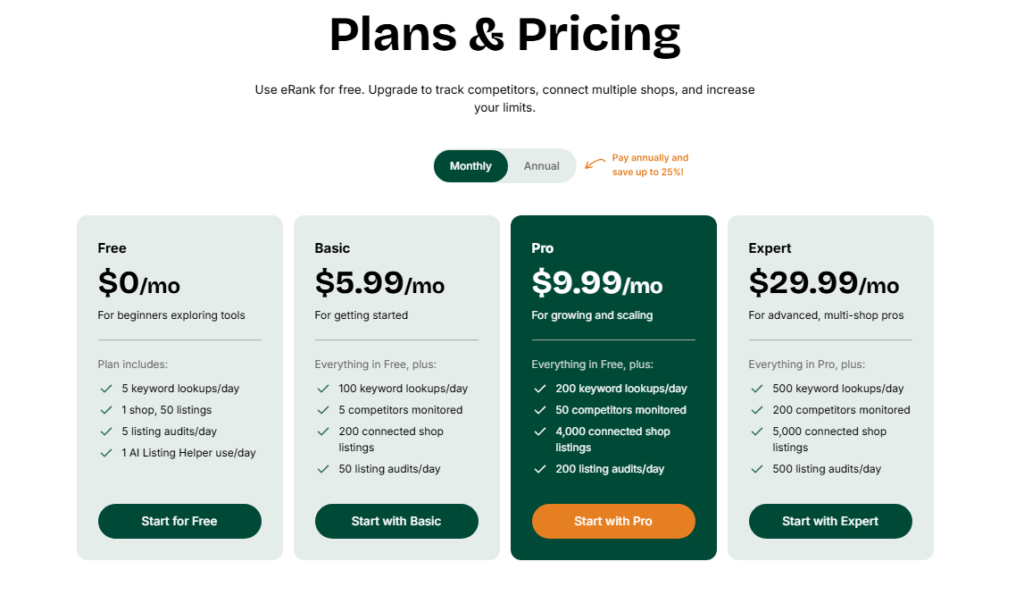
The paid tier sits at $29.99 per month, and it opens up the full suite of keyword research, competitor analysis, and listing tools.
For sellers just starting out, the free plan alone puts eRank miles ahead of most paid-only tools.
Sale Samurai charges a flat $9.99 per month and markets that single price as covering everything.
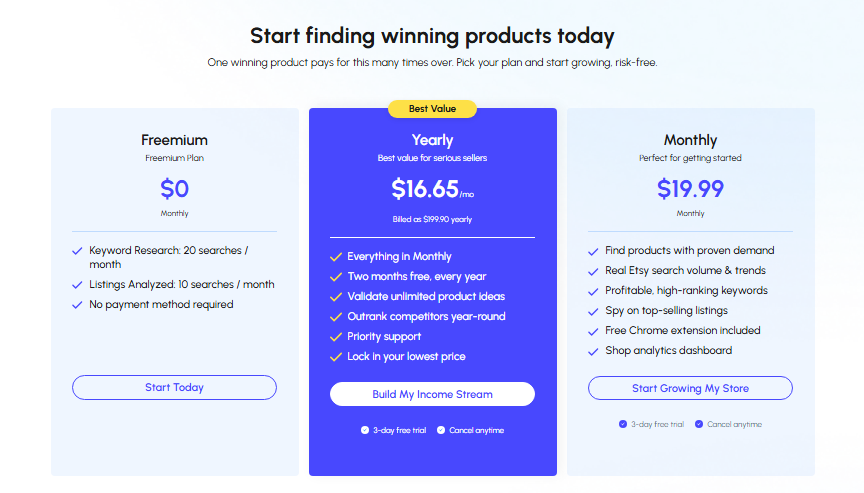
On paper that sounds like a deal. But if the tool delivers less depth, and in my testing it did, the lower price stops feeling like a win.
| Plan | eRank | Sale Samurai |
|---|---|---|
| Free Tier | Yes | No |
| Paid Plan | $29.99/month | $9.99/month |
| Multi Marketplace Data | Yes (Etsy, Amazon, eBay) | Etsy focused |
| Shop Integration | Yes | Yes |
Keyword Research: Depth vs. Speed
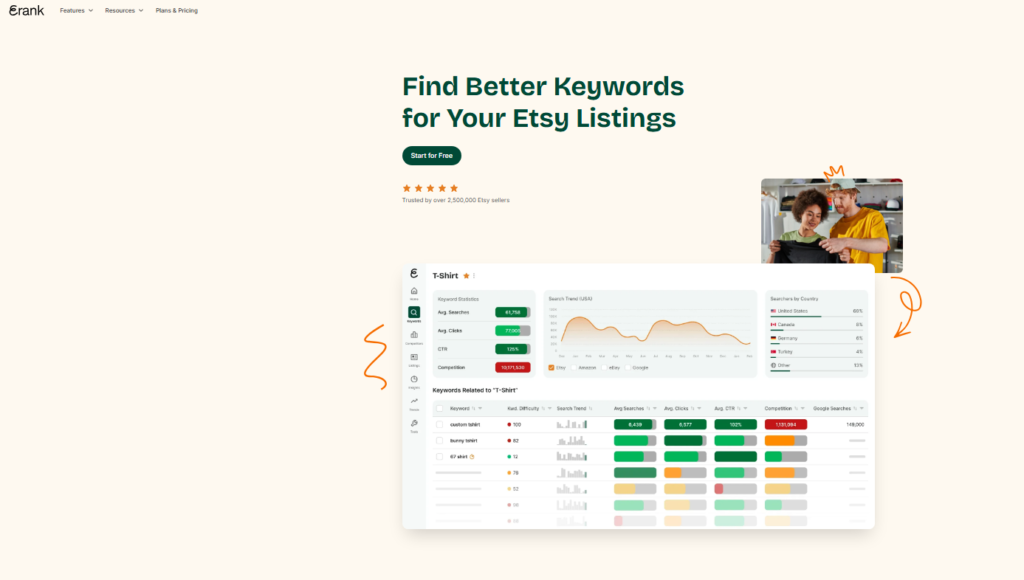
eRank’s keyword research is the deepest I’ve used for Etsy, and it explains the numbers instead of just listing them.
When I ran the same search term through both tools, eRank returned search volume ranges, competition scores, click through benchmarks, and trend graphs going back months.
Sale Samurai returned search numbers and basic suggestions: functional, but thin.
That extra context changes how you work. Using eRank’s keyword tools moved me from guessing at tags to understanding why certain phrases rank on Etsy.
Sale Samurai hands you a keyword list and leaves the reasoning to you.
Paired with that depth, eRank also pulls data across Amazon and eBay, so I could spot rising trends before they peaked on Etsy.
That cross-platform view alone saved me hours of manual research each week.
Product Research: Finding What Actually Sells
This is where the gap between the two tools became most obvious during my testing. eRank’s product research tools let me filter by competition level, search volume, and seasonal momentum.
I could see which niches were oversaturated and which had open space. The data felt grounded in what real buyers are actually typing into Etsy right now.
Sale Samurai offers filters too. You can sort by sales estimates, pricing, and competition. In my experience the filters worked fine for surface level research.
The catch is that Sale Samurai’s sales data is estimated rather than pulled from live Etsy figures, and I noticed some of those estimates felt off when I cross checked against actual top seller listings.
Net result: if you want to make a serious product decision, eRank gives you more layers of data to work with before you invest time in a new listing.
Listing Optimization: Turning Research Into Rankings
eRank’s listing audit tool is genuinely one of the most immediately useful features I’ve tested. I connected my shop, ran a listing audit, and within minutes had a prioritized list of titles, tags, and description improvements.
The tool grades each listing and tells you exactly which element is hurting visibility. It’s not vague advice: it’s specific, fixable feedback.
Sale Samurai offers listing help too, with suggested tags pulled from keyword data. I found it useful for generating tag ideas quickly.
What it will not do is audit your existing listings the way eRank does. You get ideas to add, but not a clear report on what’s currently broken.
For sellers moving from beginner guesswork to power-user precision, eRank’s listing grader is the tool that bridges that gap fastest.
Competition Analysis: Knowing Your Rivals
eRank’s competitor analysis section gave me visibility I hadn’t had before. I could look up any Etsy shop, see their top performing listings, which keywords they rank for, and how their sales trends moved over time.
This matters because understanding what a successful competitor does differently is often the fastest shortcut to improving your own shop.
Sale Samurai lets you search competitor shops and see estimated metrics. In my testing the estimates were directionally useful but not precise enough to base strategic decisions on.
eRank’s data felt closer to what I saw reflected in actual search results when I tested keyword ranking changes on my own listings.
Extra Features That Separate eRank and Sale Samurai
eRank packs in several extras that Sale Samurai doesn’t match. The Trend Buzz feature tracks seasonal search spikes so you can list new products before demand peaks, not after.
The Chrome extension (Sidekick) lets you do keyword research directly on Etsy without switching tabs.
Paired with that, eRank’s community of over one million Etsy sellers means there’s a large pool of tutorials, forum answers, and shared strategies to tap into.
Sale Samurai has a Chrome extension too, and it works well for quick tag ideas while browsing Etsy. If speed and simplicity are your priorities, it gets the job done.
What it does not replicate is the breadth of trend tools, bulk listing analysis, or the educational content library that eRank has built over years.
User Experience: Which Tool Feels Better to Use
I’ll be straight here. When I first opened eRank, the dashboard felt like a lot. There are many tools visible at once, and the learning curve is real.
That said, once I spent a few hours clicking through the sections, everything started to click. The layout becomes intuitive fast, and the help documentation is genuinely good.
Sale Samurai has a cleaner, simpler interface. If you want to log in, grab some keyword ideas, and log out in ten minutes, it’s the faster tool to navigate.
That simplicity comes from having fewer features to display, not from better design.
Net result: eRank rewards the time you invest learning it. Sale Samurai is quicker to start but offers a lower ceiling once you’re ready to grow.
Who Should Choose eRank?
- Sellers who want a free starting point before spending any money on tools
- Shop owners ready to graduate from basic tag guessing to data-driven listing strategy
- Multi marketplace sellers who want keyword data from Etsy, Amazon, and eBay in one place
- Sellers who care about trend forecasting and want to list products ahead of seasonal demand
- Anyone who wants community support backed by over one million active users
Who Should Choose Sale Samurai?
- Sellers who want the lowest possible monthly cost and just need basic keyword suggestions
- Beginners who prefer a simple interface with minimal features to learn upfront
- Shop owners doing quick daily research without needing deep competitor analysis
- Sellers who mainly need tag ideas and don’t require full listing audits
What Most eRank vs Sale Samurai Comparisons Miss
The part most comparisons underrate is how much eRank’s free plan actually delivers. Most “free tiers” in SaaS tools are barely functional teases.
eRank’s free plan gave me real keyword data, real competitor lookups, and actual listing checks before I ever entered a credit card. That’s a meaningful difference for a seller testing tools on a budget.
The second thing most comparisons ignore is data breadth outside Etsy. Sale Samurai is built purely for Etsy.
eRank pulls in search behavior from Amazon and eBay too. This matters because trending searches often appear on larger marketplaces weeks before they spike on Etsy.
I used that cross-platform data to list two products ahead of trend peaks and saw measurably higher early traffic on both.
Third: eRank’s tutorial content and active community are underrated as part of the product. You’re not just buying a tool. You’re buying access to years of Etsy SEO training material.
For sellers who are still figuring out Etsy SEO, that context makes the paid plan worth far more than the sticker price suggests.
Frequently Asked Questions
Is eRank better than Sale Samurai for beginners?
Yes, in my experience eRank is the stronger starting point. Its free plan lets beginners explore keyword research and listing analysis at zero cost. The interface has a short learning curve, but the educational resources available inside the platform help new sellers move from beginner to confident user much faster than Sale Samurai’s simpler but shallower toolset allows.
Can I use eRank for free?
Yes. eRank has a genuine free tier that includes keyword lookups, competitor checks, and basic listing analysis. You don’t need a credit card to start. The paid plan at $29.99 per month unlocks the full feature set, but the free plan is substantial enough to deliver real value before you commit to spending anything.
Does Sale Samurai have a free plan?
No. Sale Samurai requires a paid subscription at $9.99 per month to access its features. There is no free tier. This means every new user must pay before evaluating whether the tool fits their workflow, which is a clear disadvantage compared to eRank’s accessible free entry point.
Which tool has better keyword data for Etsy SEO?
eRank provides deeper keyword data in my testing. It shows search volume ranges, competition scores, trend graphs, and cross marketplace comparisons across Etsy, Amazon, and eBay. Sale Samurai returns keyword suggestions and search estimates but lacks the layered context eRank provides. For serious Etsy SEO work, eRank’s keyword tools are clearly more comprehensive.
Is eRank worth the price compared to Sale Samurai?
eRank’s paid plan costs more per month, but it delivers considerably more: deeper analytics, listing audits, trend tracking, multi marketplace data, and a large seller community. If you treat your Etsy shop as a real business and want tools that scale with your ambition, eRank’s $29.99 plan delivers stronger return on that investment than Sale Samurai’s cheaper but thinner offering.
Does eRank work for Amazon and eBay sellers too?
Yes. eRank pulls keyword and trend data from Amazon and eBay alongside Etsy. This matters because shifts in buyer search behavior often show up on larger platforms first. Sellers who use this cross-platform data can spot rising niches earlier and list products ahead of demand peaks on Etsy, giving them a timing advantage over sellers using Etsy only tools.
Final Verdict: eRank vs Sale Samurai in 2026
After weeks of testing both tools side by side, eRank is my clear recommendation for the vast majority of Etsy sellers.
It offers more data, more tools, better competitor analysis, a genuinely usable free plan, and a seller community that adds real learning value to the subscription.
The paid plan at $29.99 per month is higher than Sale Samurai’s price, but the depth of features you get in return makes it the stronger investment.
Choose eRank if you want a complete SEO toolkit, plan to grow your shop seriously, or want to start without spending a cent.
Choose Sale Samurai if your budget is the absolute deciding factor and you only need quick tag suggestions without deeper analysis.
Net result: eRank wins this comparison on features, data quality, accessibility, and long-term value. If you’re ready to treat your Etsy shop like a real business, eRank is the tool built for that goal.