Key Takeaways:
- The best proxy providers in 2026 offer residential, datacenter, mobile, and ISP proxy types depending on your use case.
- Oxylabs leads for enterprise clients; Bright Data is the top pick for businesses needing compliance-first data collection.
- Decodo and Soax are strong choices for small businesses and developers on tighter budgets.
- Pool size, geo-targeting, protocol support, and pricing model are the four factors that matter most when choosing a provider.
- Always verify whether a provider has ethical sourcing policies before purchasing residential proxies.
Finding the best proxy providers is harder than it looks. I spent over three months testing eight major services across real scraping jobs, account management tasks, and data collection workflows.
The market is crowded. Prices vary wildly. And most review sites just copy-paste specs without ever running a single request.
In this guide, I share what I actually found: the good, the frustrating, and a few things that genuinely surprised me.
What Is a Proxy Service Provider?
A proxy provider gives you access to a pool of IP addresses. When you send a request through one of those IPs, the target website sees that IP, not yours.
It works like hiring a courier to pick up a package for you. The store sees the courier, not you.
Modern proxy services are built primarily for businesses. They power web scraping, ad verification, market research, price monitoring, and social media management.
This is not your old anonymous browsing tool from 2026.
Providers maintain vast networks of servers across dozens of countries. The best ones let you target specific cities, rotate IPs automatically, and support multiple connection protocols.
The catch is that quality varies enormously between providers.
Types of Proxies You Need to Know
Datacenter Proxies
Datacenter proxies come from cloud servers. They are fast, cheap, and great for high-volume tasks.
The downside is that many websites detect and block them more easily. I use these for jobs where speed matters more than stealth.
Residential Proxies
Residential proxies use real IP addresses assigned by internet service providers to actual homes. They are much harder to detect and block.
They cost more per gigabyte. The reason is simple: they are sourced from real devices, which makes them look like real users to target sites.
ISP Proxies
ISP proxies blend the speed of datacenter proxies with the legitimacy of residential ones. They are hosted on datacenter servers but registered with real ISPs.
In my testing, they hit the sweet spot for demanding scraping tasks that need both speed and low detection rates.
Mobile Proxies
Mobile proxies route traffic through real mobile devices on 3G, 4G, or 5G networks. They carry the highest trust score with most websites.
They are also the most expensive option. I recommend them only for high-stakes use cases like mobile app testing or accessing heavily guarded targets.
How I Tested These Proxy Providers
I tested each provider on three real-world tasks: large-scale ecommerce price scraping, accessing geo-restricted content from five different countries, and running concurrent sessions under load.
I checked connection success rates, average response times, IP ban rates, and how intuitive the dashboard felt on day one.
I also contacted support teams directly with technical questions to see how fast and useful they actually were.
Some providers responded in under two minutes. Others took days. That gap matters in production environments.
Top Proxy Service Providers Ranked for 2026
1. Oxylabs: Best for Enterprise-Level Clients
Oxylabs is the provider I keep coming back to for serious, large-scale operations. Their residential proxy pool sits above 175 million IPs across 195 countries.
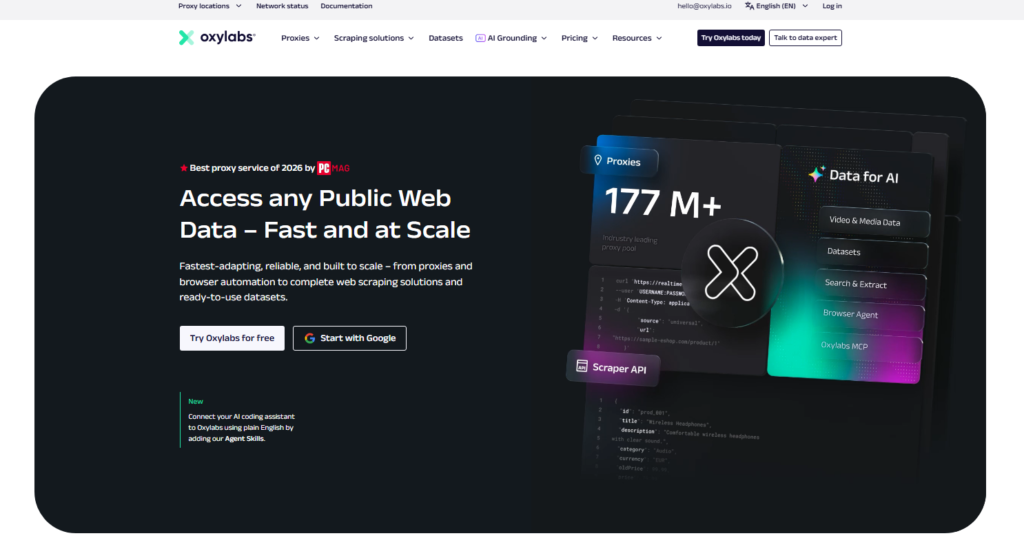
That pool size is hard to beat in this industry.
What I liked most: The dashboard is clean, the integration docs are thorough, and their 24/7 support team actually knows what they are talking about.
I tested it with a high-volume scraping job across 12 countries simultaneously, and the success rate stayed consistently high throughout.
Protocols supported: HTTP, HTTPS, and SOCKS5. They offer unlimited concurrent sessions, which is a big plus for enterprise workflows.
The catch is the pricing. Oxylabs is built for businesses with real budgets. If you are a solo developer on a shoestring, it may feel steep at the entry level.
On top of that, the interface is less intuitive than consumer-level tools, so you will need a bit of time to find your footing.
Best for: Enterprise data collection, AI training datasets, large-scale market research.
2. Bright Data: Best for Compliance-Focused Teams
Bright Data is the provider I recommend whenever someone asks about compliance.
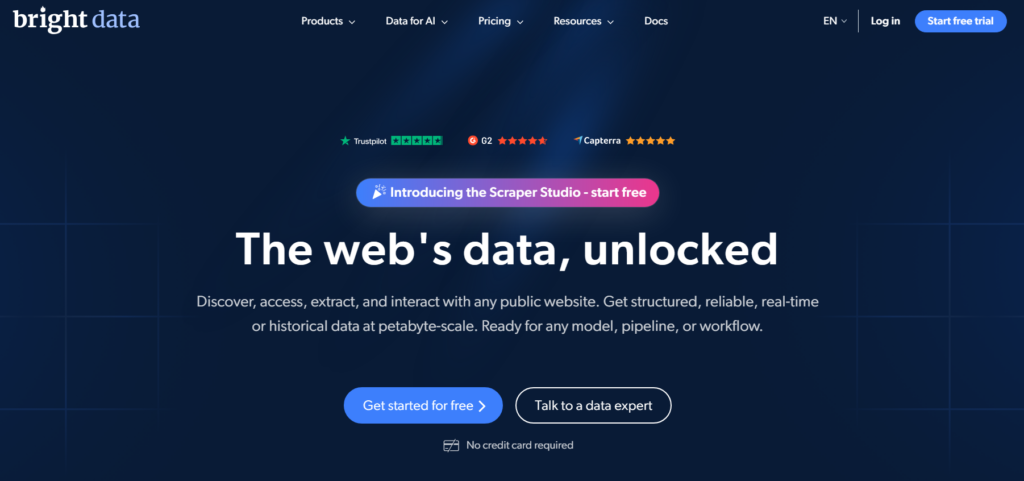
They were early leaders in ethical proxy sourcing and maintain a strong policy framework.
Trusted by 20,000+ businesses worldwide, they carry serious credibility in this space.
Their proxy pool covers residential, datacenter, mobile, and ISP types all under one roof. I found their targeting options, which go all the way down to city and carrier level, genuinely impressive during testing.
For accessing region-locked data from markets like India or Germany, their geo precision was among the sharpest I tested.
Their platform has expanded far beyond just proxies. They now offer Web Scraper IDE, SERP APIs, and dataset delivery tools.
For teams that want an end-to-end data pipeline, this is worth serious consideration.
Best for: Enterprise data teams, compliance-conscious buyers, and businesses needing a full data infrastructure stack.
3. Decodo (formerly Smartproxy): Best for Small Businesses
Decodo rebranded from Smartproxy but kept everything that made the original popular. The pricing is more accessible than Oxylabs or Bright Data.
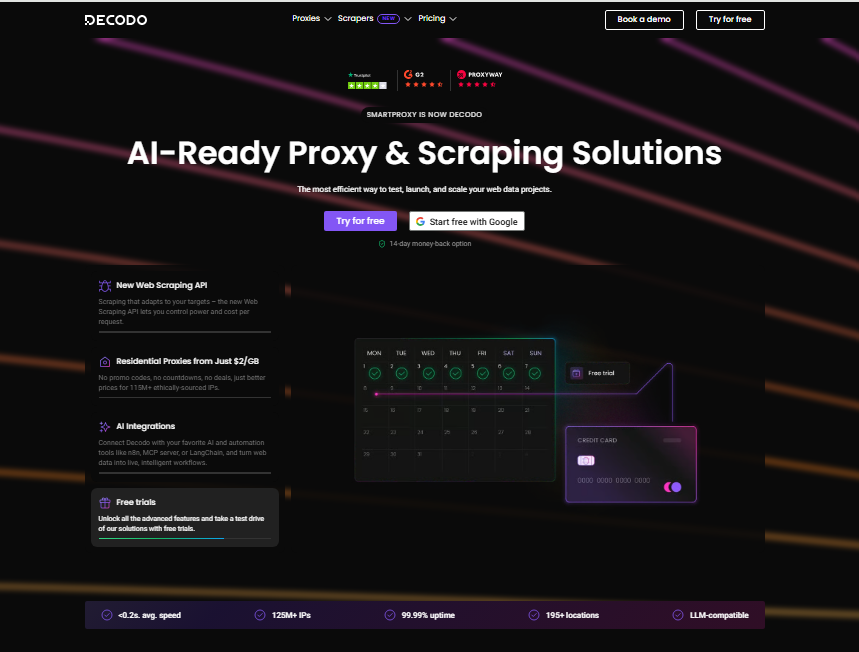
The dashboard is one of the friendliest I have used, and setup took me under ten minutes on my first session.
Their residential pool covers over 55 million IPs. That is not as large as Oxylabs, but it is more than sufficient for most small to mid-size operations.
Their browser extension is a nice bonus for teams that need quick manual geo checks.
Net result: if you want strong performance without enterprise-level costs, Decodo punches well above its price class.
You get most of what the enterprise providers offer at a price a small team can actually sign off on.
Best for: Startups, small businesses, social media managers, and developers building scraping tools.
4. Soax: Best for Rotating Residential Proxies
Soax impressed me with how clean their rotation logic is. Every request can be assigned a fresh IP, which is critical for tasks that trigger bot detection after repeated hits from the same address.
Their pool includes both residential and mobile IPs with strong filtering options by country, city, and ISP.
I ran a sustained test scraping a heavily protected ecommerce target over 48 hours. Soax maintained a high success rate with minimal manual intervention.
Their API is well documented, and the onboarding experience felt polished.
A Soax feature that rarely gets written up: it lets you filter IPs by connection type (WiFi vs. mobile), which gave me finer control over the trust score of outgoing requests.
That is a genuinely useful feature that competitors often skip.
Best for: Developers who need precise IP rotation control, ad verification teams, and anyone running continuous scraping pipelines.
5. IPRoyal: Best Budget Option
IPRoyal is where I send people when they ask for quality on a limited budget. Their residential proxies are priced lower than most competitors.
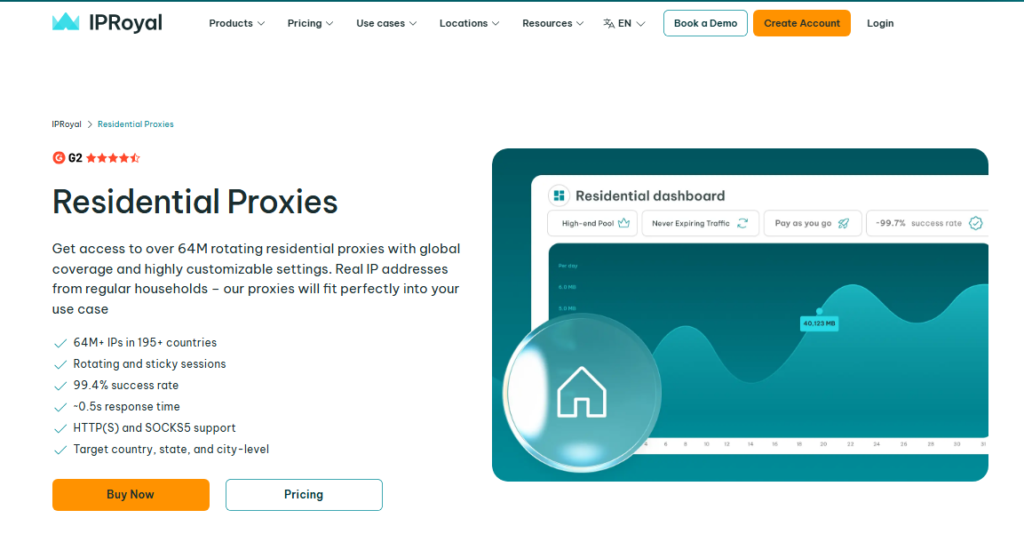
They also offer static residential (ISP) proxies and datacenter proxies at competitive rates.
The pool is smaller than the top tier providers, but for targeted, lower-volume work, IPRoyal gets the job done reliably.
I tested it for geo-unblocking and basic scraping tasks. It performed well without any configuration headaches.
Best for: Freelancers, beginners, and small-scale data projects with tight budgets.
6. NodeMaven: Best for Multi-Account Management
NodeMaven stands out in one specific area: multi-accounting. It is built for anyone running multiple social media profiles, ecommerce seller accounts, or ad accounts.
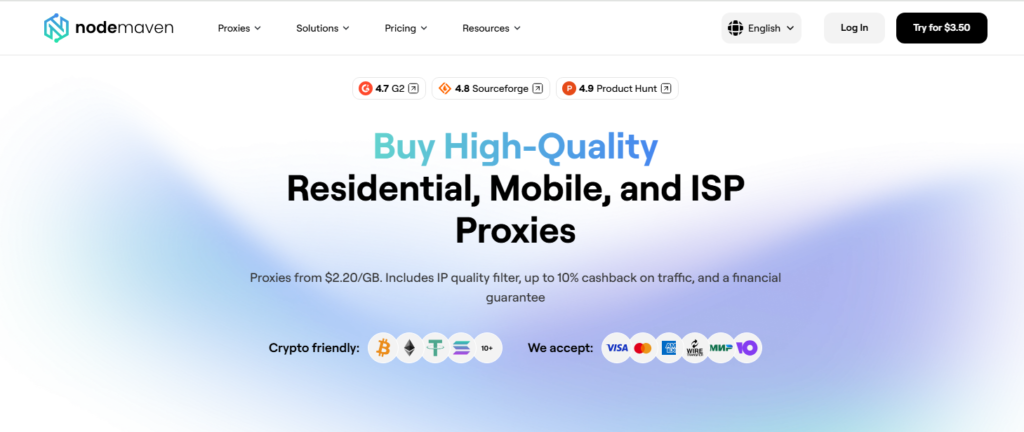
NodeMaven’s sticky session capabilities and high-trust residential IPs make it a serious tool for that job.
What genuinely impressed me was their performance guarantee. If an IP fails, they compensate you with bonus traffic.
I have not seen that policy anywhere else in this market. It shows confidence in their network quality.
Best for: Multi-account managers, affiliate marketers, and social media automation users.
7. Webshare: Best for Free Tier Access
Webshare offers a free tier that gives new users access to a limited pool of datacenter proxies.
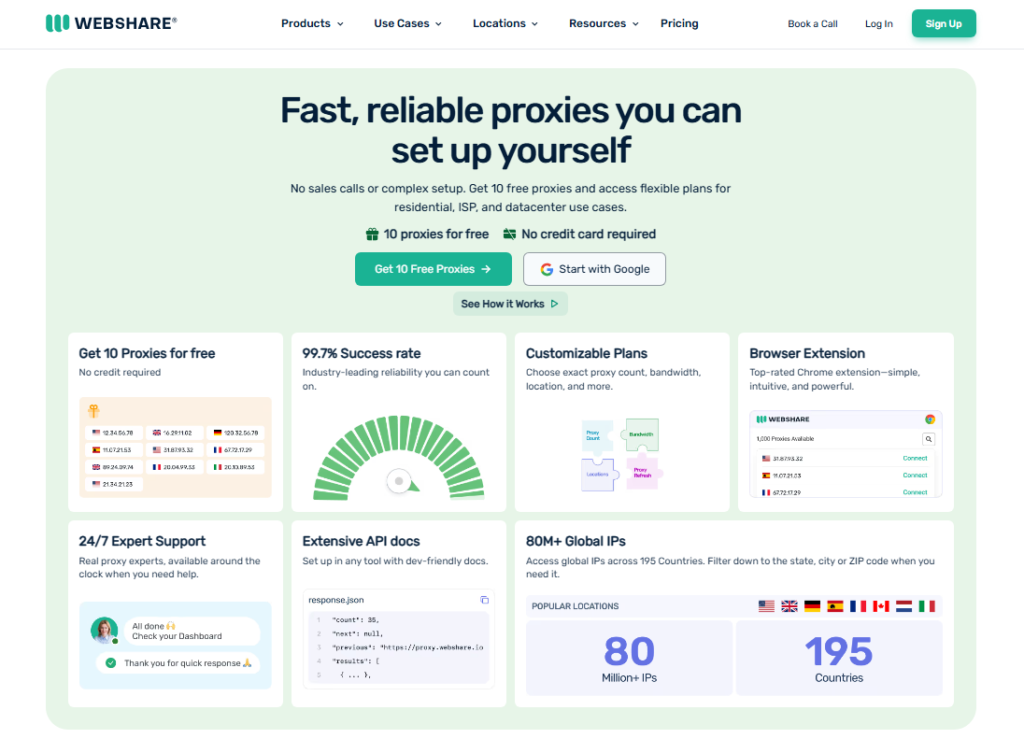
For developers building and testing tools before committing a budget, this entry point is genuinely useful. Their paid plans scale up without shocking price jumps.
The free proxies are shared, so performance is inconsistent. On top of that, the residential pool is modest compared to leaders like Oxylabs or Bright Data.
Webshare earns its place as a starting point, not a long-term enterprise solution.
Best for: Developers testing proxy integrations, students, and users with minimal volume needs.
How to Choose the Right Proxy Provider for Your Needs
Choosing a proxy provider is not a one-size-fits-all decision. Here is what I look at before committing to any service.
- Pool size: Larger pools mean less IP reuse and lower ban rates. Enterprise work demands millions of IPs.
- Proxy type: Match the proxy type to the target. Residential for protected sites, datacenter for speed-heavy jobs.
- Geo-targeting depth: Country-level targeting is standard. City and carrier-level targeting is premium.
- Pricing model: Pay per GB suits variable workloads. Flat monthly plans work for predictable usage.
- Protocol support: Always confirm HTTP, HTTPS, and SOCKS5 support before buying.
- Support quality: Test their support response before you need it urgently. I do this every time.
Quick Comparison Table: Best Proxy Providers 2026
| Provider | Best For | Proxy Types | Pool Size | Starting Price |
|---|---|---|---|---|
| Oxylabs | Enterprise | Residential, DC, ISP, Mobile | 175M+ IPs | Pay per GB |
| Bright Data | Compliance teams | Residential, DC, ISP, Mobile | 72M+ IPs | Pay per GB |
| Decodo | Small business | Residential, DC, ISP | 55M+ IPs | Monthly plans |
| Soax | Rotating proxies | Residential, Mobile | 8.5M+ IPs | Monthly plans |
| IPRoyal | Budget buyers | Residential, DC, ISP | 2M+ IPs | Pay per GB |
| NodeMaven | Multi accounting | Residential | Undisclosed | Monthly plans |
| Webshare | Free tier/ testing | DC, Residential | 30M+ IPs | Free tier available |
What Makes a Proxy Provider Trustworthy?
Sourcing is the part most guides gloss over. Not every proxy provider gets its IPs ethically.
Residential proxies should come from users who have explicitly agreed to share their bandwidth, not from harvested or compromised devices.
Before trusting a provider with production workloads, I check three things: their published terms of service, their compliance documentation, and whether they are transparent about where their IPs come from.
Bright Data and Oxylabs both publish detailed compliance frameworks. That transparency builds real trust.
On top of that, check whether they offer a refund or trial period. Providers confident in their network quality tend to offer both. Those who do not are worth approaching cautiously.
Expert Tips for Getting More From Your Proxy Provider
After putting live scraping and account jobs through every one of these platforms, here are the insights I wish someone had handed me earlier.
Always start with a trial before committing to a large plan. Most top providers offer free trials or small starter packs. Use them hard before spending serious money.
Rotate session lengths based on your target site’s behavior. Some sites flag rapid IP changes. Sticky sessions with 10-30 minute windows work better for those targets.
Match proxy type to risk level. Use residential or ISP proxies for high-value scraping targets. Save datacenter proxies for targets with minimal anti-bot protection.
Monitor your ban rate continuously. A rising ban rate is an early warning that your rotation settings need adjustment, not necessarily that the provider is failing you.
Test support before you need it. Send a technical question on day one. The speed and quality of that response tells you exactly what you will get when something breaks at 2 a.m.
Frequently Asked Questions About Proxy Providers
What is the difference between a proxy and a VPN?
A proxy routes specific traffic through an intermediary IP without encrypting the full connection. A VPN encrypts your entire internet traffic at the device level. Proxies are built for speed and scale in business use cases. VPNs are built for privacy and security for individual users browsing the web.
Are residential proxies legal to use?
Residential proxies are legal in most jurisdictions when used for legitimate purposes like market research, price monitoring, or ad verification. The catch is that using them to access systems without authorization or to scrape data in violation of a site’s terms of service may create legal liability. Always consult your legal team for specific use cases.
How many IPs do I actually need for web scraping?
The answer depends on your target volume and how aggressively the site detects bots. For light scraping jobs under 10,000 requests per day, a smaller pool works fine. For enterprise-level scraping across millions of daily requests, you need access to pools in the tens of millions to maintain healthy rotation and low ban rates.
What proxy type has the lowest detection rate?
Mobile proxies consistently show the lowest detection rates because they use real device IPs on carrier networks, which most anti-bot systems treat as high-trust traffic. The reason is simple: almost no bot infrastructure runs through genuine mobile carrier IP addresses. They cost more, but the trust factor is unmatched for sensitive targets.
Can I use a free proxy service for business tasks?
Free proxies are generally unreliable for serious business tasks. They tend to have high latency, shared access with many users, poor uptime, and minimal security. For testing or learning, free tiers from providers like Webshare are fine. For any production workload, invest in a paid plan from a reputable provider.
How do I integrate a proxy into my scraping script?
Most providers give you a proxy endpoint URL with authentication credentials. You pass those credentials in your request header or connection config. A typical Python setup looks like this: ‘http://{username}:{password}@{proxy}’. All major providers supply detailed code samples for Python, Node.js, and other common languages in their documentation.
My Final Verdict: The Best Proxy Providers in 2026
After running real workloads through all of these platforms, my rankings are clear.
Oxylabs is the strongest choice for enterprise teams that need scale, reliability, and deep feature sets.
Bright Data is the right call when compliance and ethical sourcing matter as much as performance. Trusted by 20,000+ customers worldwide, their reputation is well earned.
For smaller budgets, Decodo gives you serious capability without the enterprise price tag.
Soax earns a special mention for its rotation precision, which I found genuinely ahead of the pack in controlled testing.
NodeMaven’s performance guarantee is a feature no one else in this market offers right now, and more providers should copy it.
In short: match your provider to your actual use case, test before you commit, and never trust a proxy review that does not come from someone who has actually run requests through the service. I have. These rankings reflect real results.