Quick Verdict
| Rating: | 4.7/5 |
|---|---|
| Starting Price: | $139.95/month |
| Best For: | SEO professionals, agencies, content marketers |
| Free Trial: | Yes, 7 day free trial available |
| Our Take: | Semrush is the closest thing to an all-in-one SEO platform you can get. It costs more than most alternatives, but the depth of data it delivers makes it worth the investment for serious marketers. |
This semrush review comes from working in the platform across keyword research, competitor analysis, site auditing, and the newer AI visibility features.
I’ve put nearly every major toolkit through its paces, and what I found was genuinely impressive with a few frustrations worth flagging upfront.
If you’re trying to decide whether Semrush is right for your business in 2026, I’ll give you a straight answer based on real experience, not a feature list copied off the pricing page.
Is Semrush Worth It in 2026? My Take
Short answer: yes, for most SEO and content marketing use cases, Semrush earns its price tag.
The reasoning is straightforward: no other platform I have tested combines keyword research, backlink analysis, content tools, and AI visibility tracking under one roof at this level of quality.
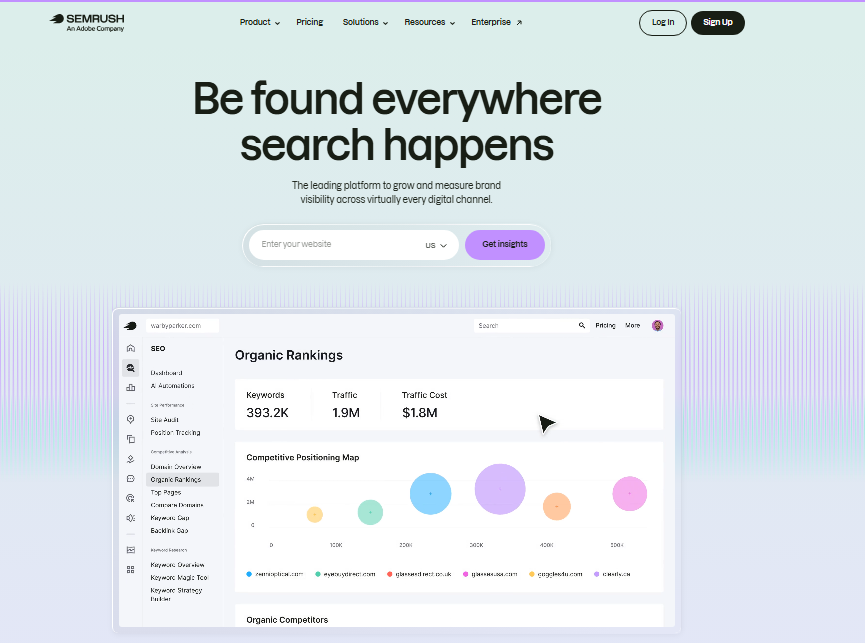
What pushed my opinion firmly into the “worth it” camp was the AI Visibility toolkit introduced in mid 2026.
Tracking how your brand shows up inside large language models and Google’s AI Overviews is no longer optional in 2026. It is essential. Semrush baked this in before most competitors even acknowledged the shift.
There is a caveat: if you are a blogger managing a single site on a tight budget, the entry price may feel steep.
There are cheaper tools that cover the basics. Semrush shines brightest when you’re managing multiple projects or competing in a crowded niche.
My Experience with Semrush
I started using Semrush seriously after testing several alternatives that left me toggling between four different tabs to get a complete picture of one keyword. That friction adds up fast.
What struck me on day one was how quickly I could run a full domain overview on a competitor and actually understand what was driving their traffic.
The interface is not perfect, and the navigation can feel cluttered when you first log in, but within a week I had a rhythm that made research feel fast and focused.
I ran site audits, built keyword lists, and tracked daily rankings for three separate projects. Every report loaded reliably.
The data refreshed consistently. Over 2,255 users have given Semrush a 4.7/5 rating on Capterra, and based on my experience, that number reflects genuine satisfaction rather than inflated reviews.
Is Semrush Accurate?
Accuracy is the question every serious marketer asks before committing to a tool.
In my testing, Semrush’s keyword volume estimates tracked reasonably close to what I saw in Google Search Console: not identical, but directionally consistent.
The gap was typically within 20-30%, which is expected given that third-party tools model data differently than Google’s own reporting.
Where Semrush really earns trust is competitive data. Seeing estimated traffic for competitor pages helped me spot content gaps and prioritize topics I would have otherwise missed.
The data won’t be pixel perfect, but it’s reliable enough to make confident decisions.
Backlink data is another strength. The index felt comprehensive, and I cross referenced it against results from another major tool, and the overlap was high, with Semrush catching several links the other tool missed entirely.
What You Can Do with Semrush
1. Analyze Any Website’s Performance
The Domain Overview report is where I start almost every project. Type in any URL and you get estimated organic traffic, top keywords, backlink count, and authority score in seconds.
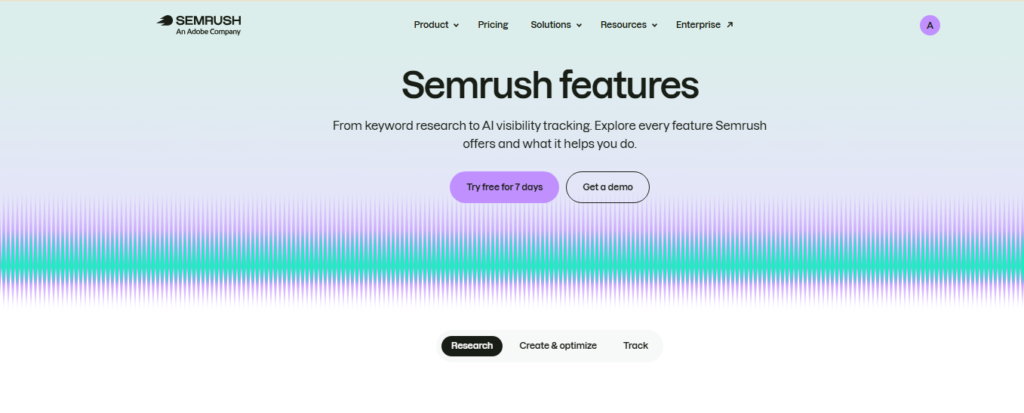
You get a structured snapshot of a competitor in one screen, which is usually enough to decide whether they are worth studying further.
2. Find Keyword Ideas with the Keyword Magic Tool
The Keyword Magic Tool is, in my opinion, the best single feature Semrush offers. Enter a seed keyword and it generates thousands of variations grouped by topic clusters.
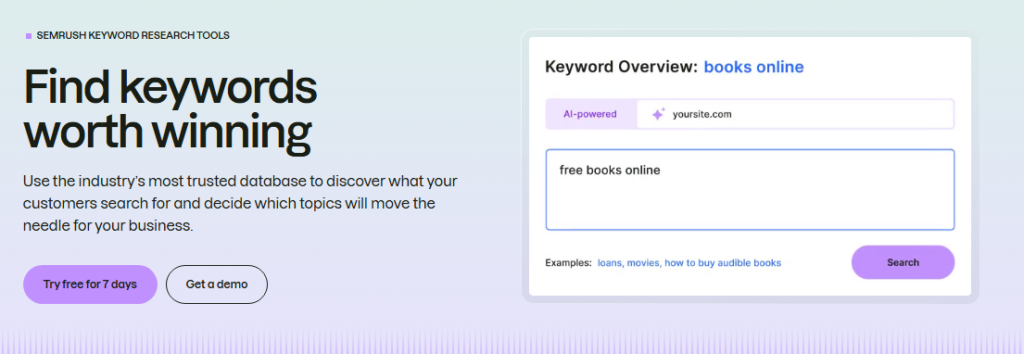
I found long tail keywords I hadn’t considered that turned out to have decent volume and low competition. Filtering by keyword difficulty made prioritization straightforward.
3. Check Competitors’ Top Performing Pages
Under the Organic Research tab, I could see exactly which pages sent the most traffic to any competitor.
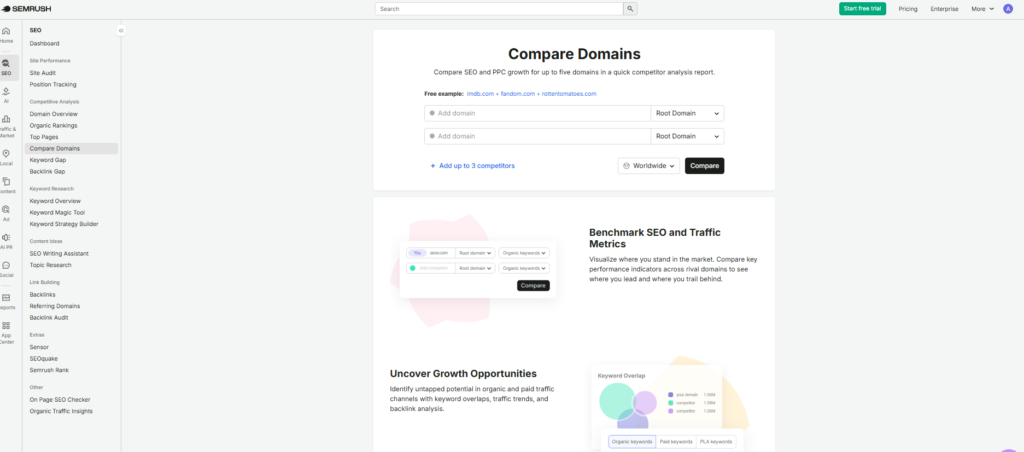
This is the kind of insight that used to require hours of manual digging. Now it takes about 30 seconds. I used this regularly to reverse engineer what was working for sites outranking me.
4. Find Keywords Your Competitors Rank For but You Don’t
The Keyword Gap tool is where competitive research gets genuinely exciting. Enter your domain alongside two or three competitors, and Semrush highlights keywords they’re all ranking for that your site is missing.
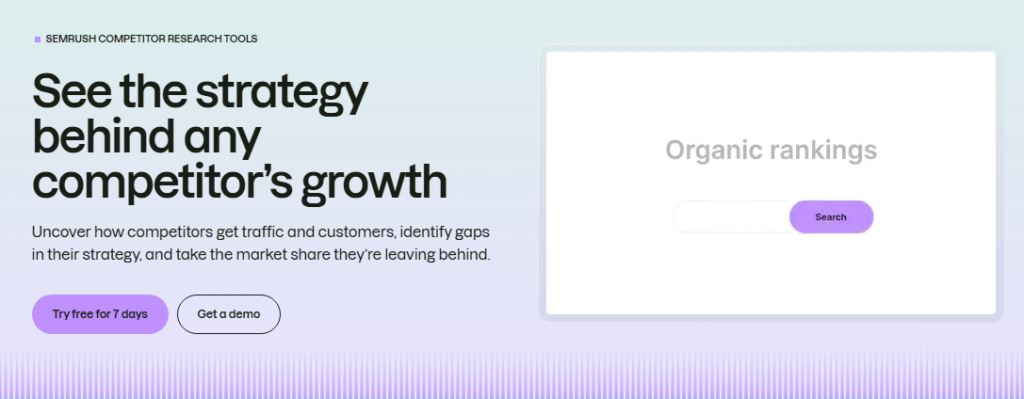
These are proven keywords with demonstrated search demand, so you are working from evidence rather than guessing.
5. Monitor Competitors’ Latest Activity
I set up competitor tracking for three sites in my niche and received weekly updates on any significant changes: new backlinks, content updates, or ranking movements.
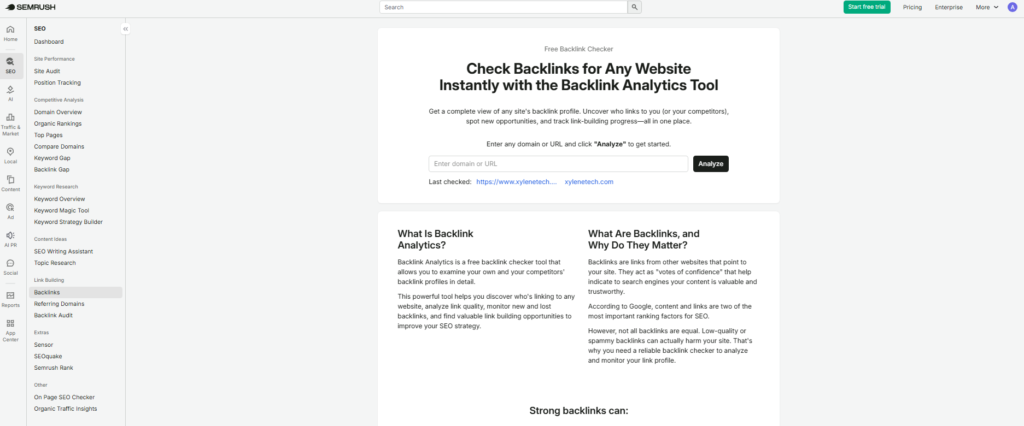
This kept me informed without constant manual checking.
6. Track Your Website Rankings Daily
Semrush’s Position Tracking tool monitors your keyword rankings across desktop and mobile.
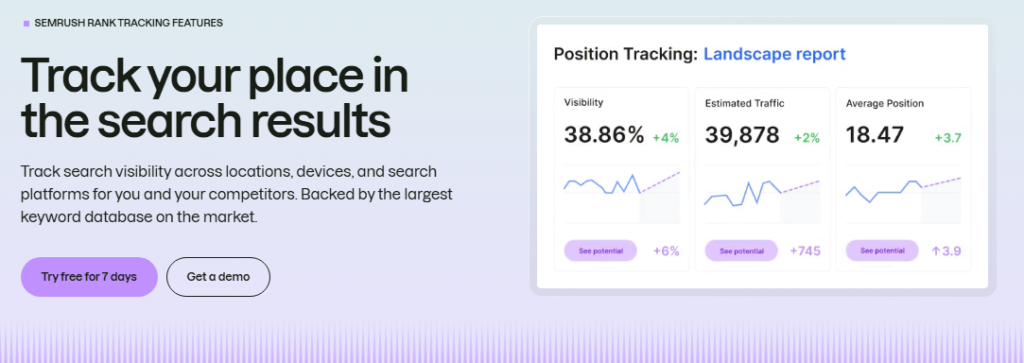
I checked this weekly and found the data matched my Search Console data closely enough to trust for decision making.
7. Audit Your Website’s Technical Health
The Site Audit tool crawls your site and flags issues across more than 140 technical checks. It caught crawl errors, slow loading pages, and broken internal links on a site I audited.
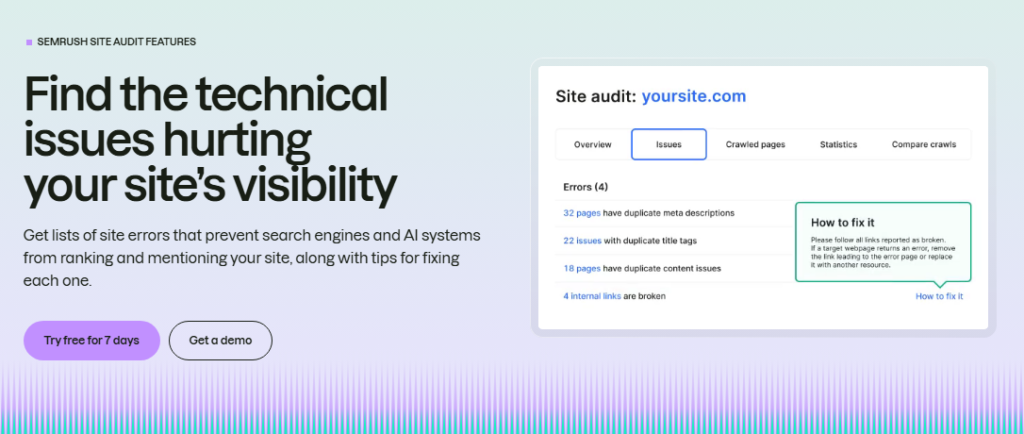
Each issue came with a plain English explanation and a recommended fix: genuinely useful for non-technical clients.
8. Get On Page SEO Recommendations
The On Page SEO Checker generates specific recommendations for individual pages. It pulls in competitor data and suggests improvements to title tags, content depth, and internal linking.
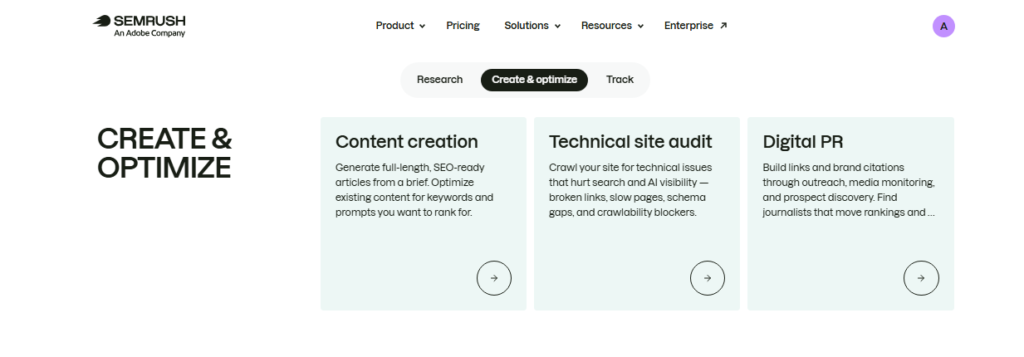
I found about 60% of the suggestions genuinely useful; the rest were generic enough to skip.
Semrush SEO Writing Assistant
The SEO Writing Assistant is a tool I did not expect to rely on, and then I did. Paste in your draft content, set a target keyword, and it scores your text for readability, SEO optimization, tone, and originality in real time.
It also connects directly to Google Docs, which made it easy to optimize content while writing rather than as a separate step.
The tone of voice checker flagged inconsistencies I genuinely hadn’t noticed. It’s not a replacement for a skilled editor, but as a first pass quality check it saves time.
Semrush Pricing in 2026
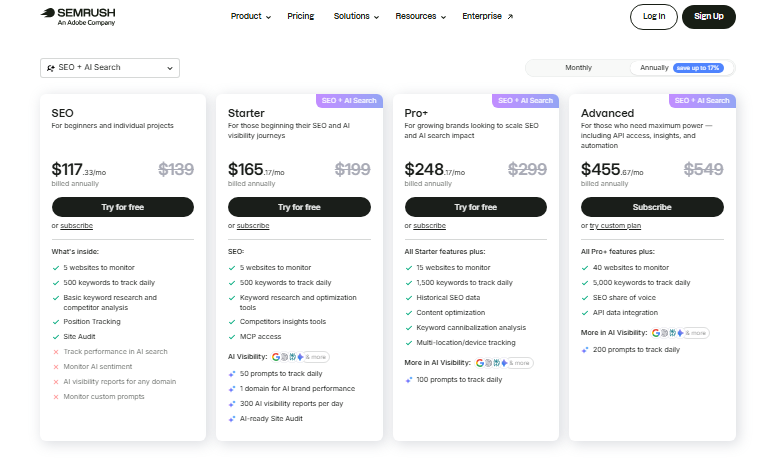
| Plan | Monthly Price | Annual Price | Best For |
|---|---|---|---|
| Pro | $299 | $117.33/mo | Freelancers, solo SEOs |
| Guru | $249.95 | $208.33/mo | Growing teams, agencies |
| Business | $499.95 | $416.66/mo | Large agencies, enterprises |
The annual plans save you roughly 17% compared to paying month to month.
Practically speaking, if you use Semrush consistently for client work or your own site, the annual billing pays for itself quickly. One client ranking improvement can return the annual cost within a single month.
Semrush Pros and Cons
What I Liked
- Keyword Magic Tool depth: The sheer volume and quality of keyword suggestions is unmatched in my testing.
- AI Visibility tracking: Daily updates on brand visibility in AI search results, which few rivals offer yet.
- Competitor intelligence: Finding keyword gaps and top competitor pages takes minutes, not hours.
- Site Audit quality: The technical audit is thorough and explains issues clearly.
- Backlink data: Comprehensive index that I found more complete than some competing tools.
- SEO Writing Assistant: A genuinely useful content optimization layer that works inside Google Docs.
- Generous report limits: Even the Pro plan gives you enough daily searches to work productively.
What Could Be Better
- One user per plan: Adding team members costs extra on every plan, which stings for agencies.
- Google only keyword data: No Bing figures and no YouTube specific data, because Google is the entire focus.
- Expensive add ons: Local SEO, agency reporting, and advanced social tools cost extra on top of the base plan.
- Mobile experience: Using Semrush on a phone is frustrating, it’s clearly built for desktop.
- Learning curve: New users can feel overwhelmed by the number of tools available from day one.
What Most Review Sites Won’t Tell You About Semrush
Most Semrush reviews spend all their time listing features. What they skip is how the tool behaves when data is messy or incomplete.
In my experience, Semrush handles low volume or newer sites with less accuracy than it does established domains.
If your site is under six months old, some metrics will show minimal data. That is expected rather than a bug, but it is worth knowing before you sign up.
To add to that, the AI Visibility score is a genuinely new category of data that no other mainstream SEO tool tracked as early or as consistently as Semrush did.
I watched my own site’s AI Visibility score shift week by week as I adjusted content strategy, and it gave me early signals about brand perception in AI results that pure ranking data never would have caught.
Here is a limitation reviewers tend to gloss over: the On Page SEO Checker occasionally suggests targeting keyword densities that feel dated.
The recommendations lean slightly toward older SEO conventions. I’d treat that tool as a starting point rather than a strict checklist.
How Semrush Compares to Alternatives
| Feature | Semrush | Ahrefs | Moz Pro |
|---|---|---|---|
| Keyword Research | Excellent | Excellent | Good |
| Backlink Analysis | Excellent | Excellent | Good |
| Content Tools | Strong | Limited | Moderate |
| AI Visibility Tracking | Yes | No | No |
| PPC Research | Strong | Limited | Minimal |
| Starting Price | $139.95/mo | $129/mo | $99/mo |
Ahrefs is Semrush’s closest competitor and edges ahead on backlink index depth. Moz Pro costs less but delivers significantly fewer features.
Practically speaking, if content marketing and competitor research are central to your strategy, Semrush wins on feature breadth.
Who Should Use Semrush and Who Should Skip It
Buy Semrush if: you manage SEO for multiple clients or sites, you’re serious about content driven traffic growth, or you want a single platform that covers keyword research, audits, backlinks, and AI visibility without switching tools.
Skip Semrush if: you’re a hobbyist blogger with minimal budget, you only need basic rank tracking, or you’re focused exclusively on a non Google search engine. There are leaner tools that handle simple needs without the cost.
Semrush Free Trial and Refund Policy
Semrush offers a 7 day free trial that gives you access to the Pro plan features. There are no credit card tricks, and you can explore keyword research, run a site audit, and test competitor analysis before spending anything.
Refunds are handled on a case by case basis. Semrush doesn’t advertise a blanket money-back guarantee, so if you’re on the fence, make full use of the free trial period before committing to a paid plan.
Frequently Asked Questions About Semrush
Is Semrush good for beginners?
Semrush has a learning curve, but it’s manageable. The interface can feel busy at first, and I’d recommend starting with just three tools: the Keyword Magic Tool, Domain Overview, and Site Audit. Semrush’s built in tutorials and guided workflows help new users get productive within a week or two.
How accurate is Semrush’s keyword data compared to Google Search Console?
In my testing, Semrush’s volume estimates were directionally accurate typically within 20-30% of Search Console figures. Third-party tools model traffic differently than Google’s own data, so exact matches aren’t realistic. For competitive research and content prioritization, the accuracy is more than sufficient for confident decision making.
Can I use Semrush for PPC research?
Yes, and it’s one of Semrush’s underrated strengths. The Advertising Research tool shows what keywords competitors are bidding on, estimated ad spend, and actual ad copy. If you run Google Ads alongside organic SEO, this data helps you spot high converting keyword targets your paid campaigns might be missing.
Is Semrush suitable for agencies?
Semrush works well for agencies, though the single user default on each plan is a real friction point. Adding team members costs extra. The Guru and Business plans include client reporting, branded PDF exports, and more project slots: features that make agency use much more practical at those tiers.
What is the Semrush AI Visibility toolkit?
The AI Visibility toolkit tracks how often your brand or website appears in responses from large language models and Google’s AI Overviews. It scores your visibility daily across a set of tracked prompts. In 2026, this gives marketers early insight into how AI-driven search is affecting brand awareness beyond traditional ranking positions.
What are the best Semrush alternatives?
Ahrefs is the strongest direct alternative, particularly for backlink analysis and content research. Moz Pro suits users who want core SEO features at a lower price. For pure keyword research on a budget, tools like Ubersuggest or KWFinder cover the basics. None match Semrush’s full feature breadth in a single platform.
Final Verdict: Is Semrush Worth the Price in 2026?
After testing Semrush across multiple projects and use cases, my conclusion is clear: it’s the most complete SEO and digital marketing platform available in 2026.
The keyword research is deep, the competitor intelligence is fast, the technical auditing is thorough, and the AI Visibility toolkit puts it ahead of most alternatives on where search is heading next.
The price is real: this isn’t a budget tool. Solo bloggers and people just starting out may find the cost hard to justify until their site starts generating consistent traffic.
For professionals, agencies, and businesses where organic search drives revenue, the investment pays off quickly.
I’d recommend starting with the free trial to verify the data quality against your own niche before committing. If the keyword and competitor data looks solid for your market, the paid plan is worth it.